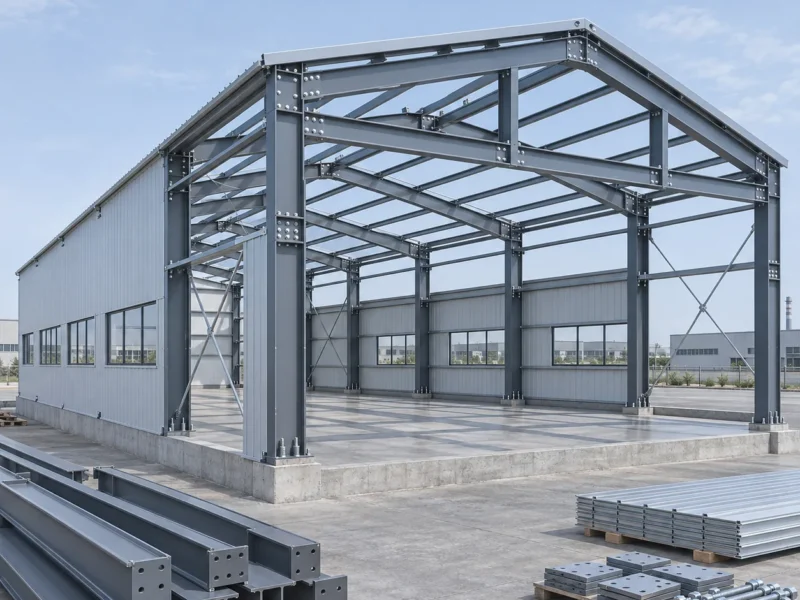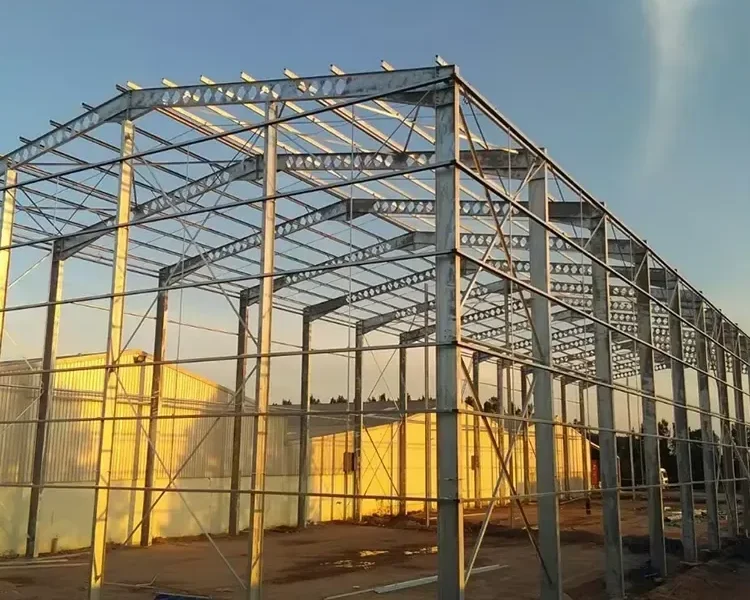
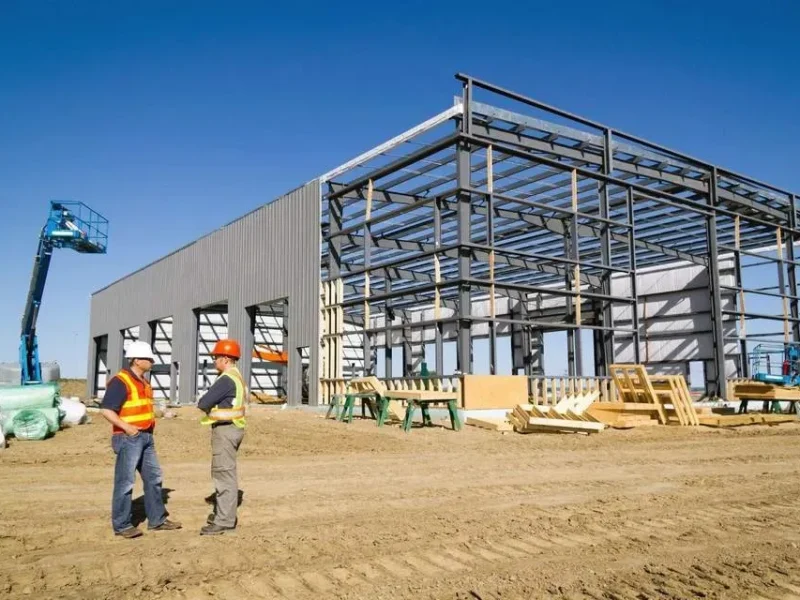
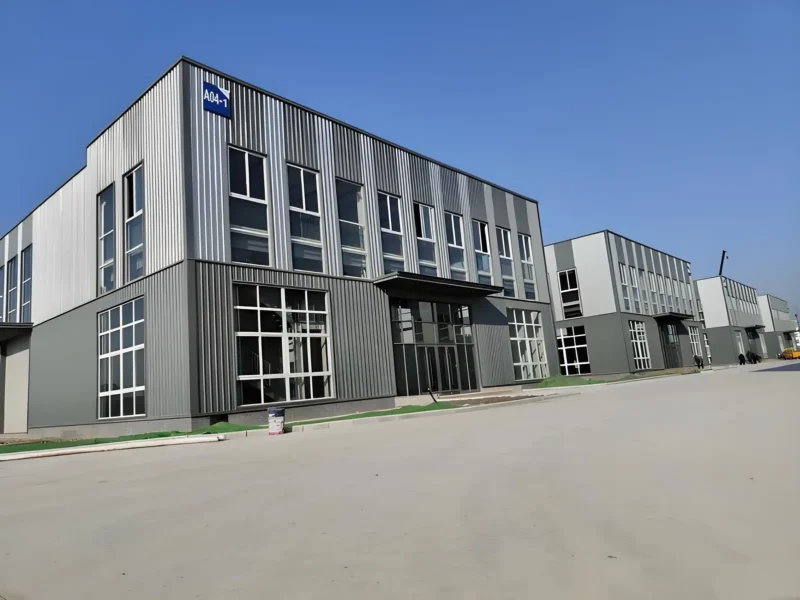
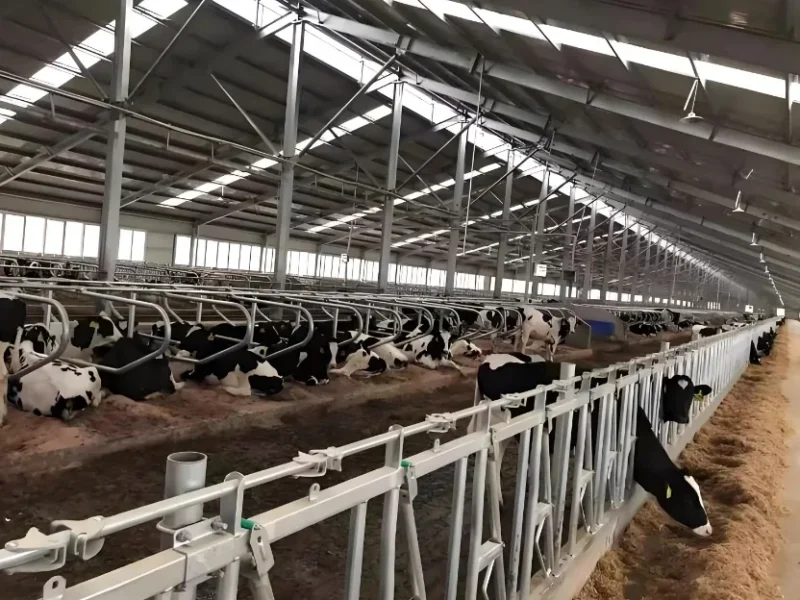
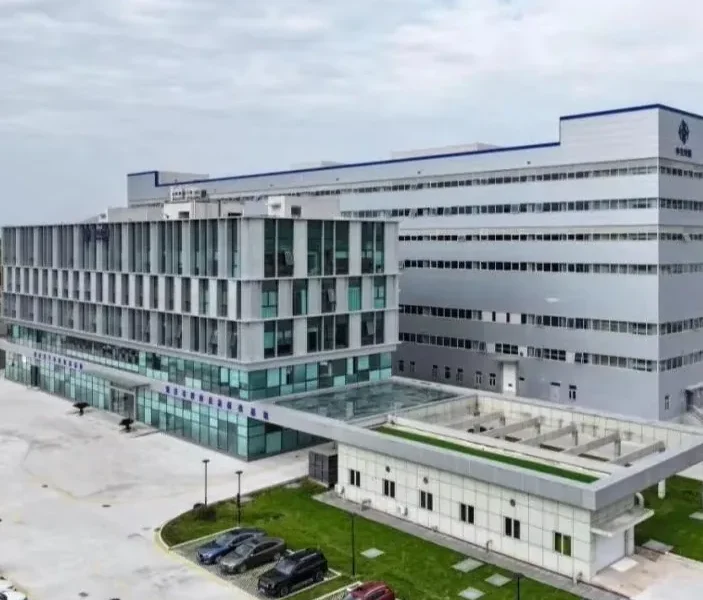
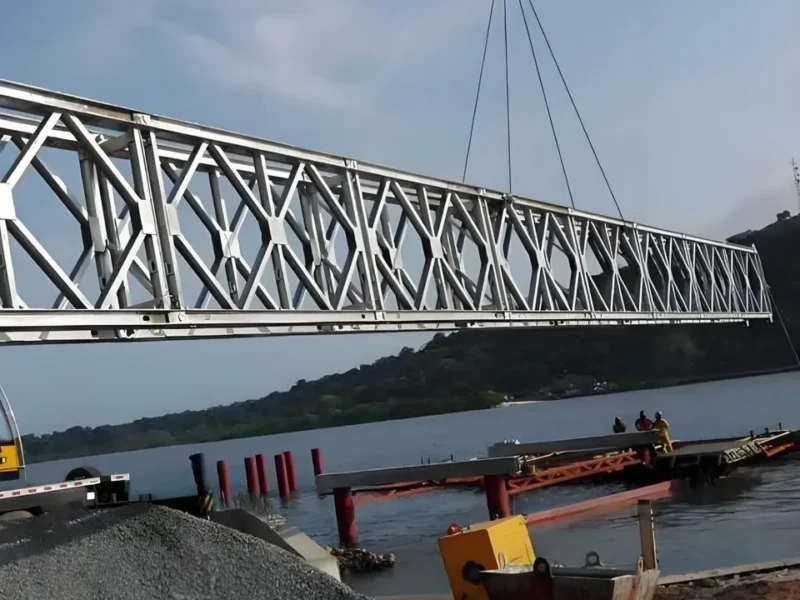
An export steel building is delivered as a kit: columns, beams, bracing, purlins, panels, trims, fasteners and accessories, packed and marked for assembly. The shipping plan is not an afterthought. Member lengths, bundle weights, port handling and the route to site all influence how the frame is divided.
What is actually in the package
The primary frame usually travels as fabricated members or bolted assemblies. Secondary framing and cladding are bundled separately. Small components are boxed and identified against a packing list. If insulation, doors, windows, gutters or fasteners are in scope, they need their own protection and their own place in the discharge sequence.
Choosing the shipping method
Standard containers suit many packaged buildings. Open-top containers and flat racks can carry longer or heavier members. Breakbulk is sometimes used for very large components or when port equipment and route allow. The choice depends on member length, weight, volume, port facilities and the final road leg.
Transport limits should be confirmed early. A frame that is efficient in the factory but too long for the available truck or crane becomes a site problem that no amount of detailing can solve cheaply.
Packing is part of the engineering
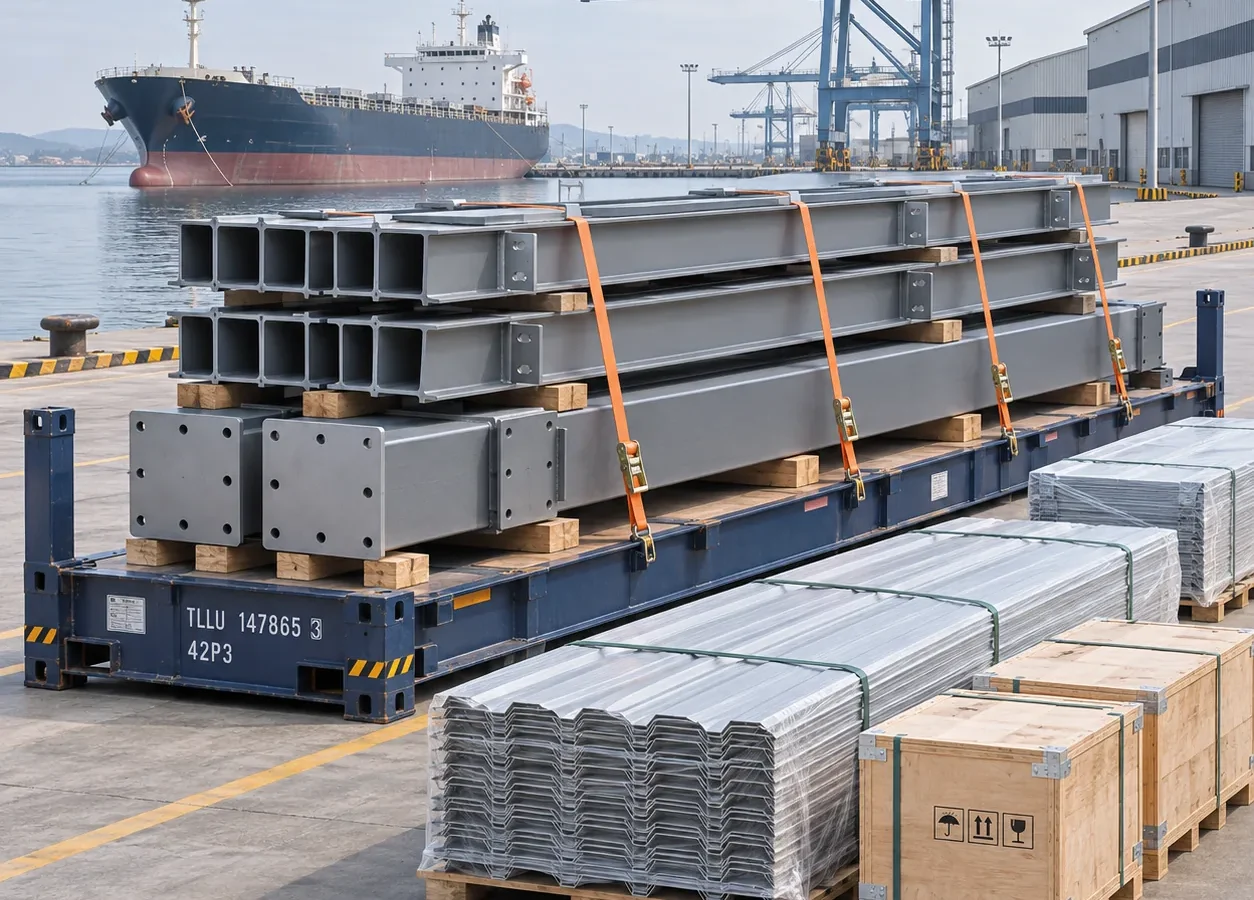
Steel is heavy and abrasive. Bundles need saddles, timber dunnage, edge protection and strapping that will survive multiple lifts. Coated surfaces need protection against rubbing and moisture. Bundle marks must match the erection sequence so the site team can find the right member without opening every package.
Small parts are the usual cause of site delays. Bolts, nuts, washers, bracing gussets and door hardware should be packed by assembly or by floor, clearly labelled, and listed against the drawing package.
From factory to site
The sequence normally runs: fabrication and inspection, surface treatment, packing list and bundle marks, inland transport, port handling, sea freight, customs clearance, delivery to site, then unloading against the erection plan. Each handover is a chance for damage or loss, so the packing specification and the shipping documents should be coordinated.
SDKM prepares the export package around the erection sequence, not around container fill alone. The objective is a site team that can receive, identify and assemble the steel in the order the drawings expect.