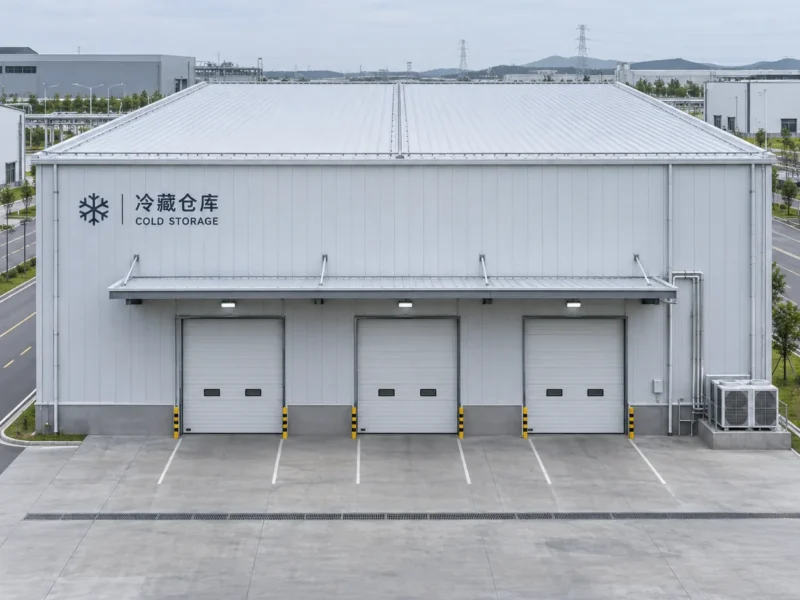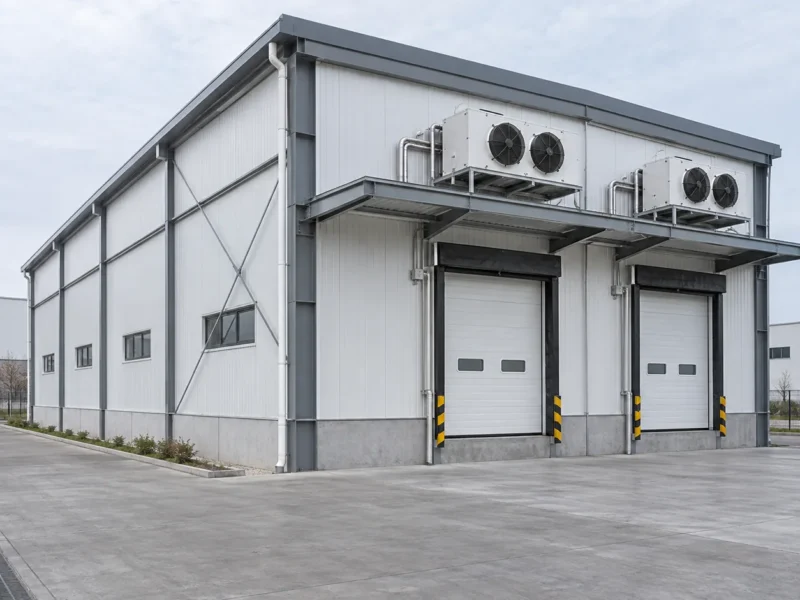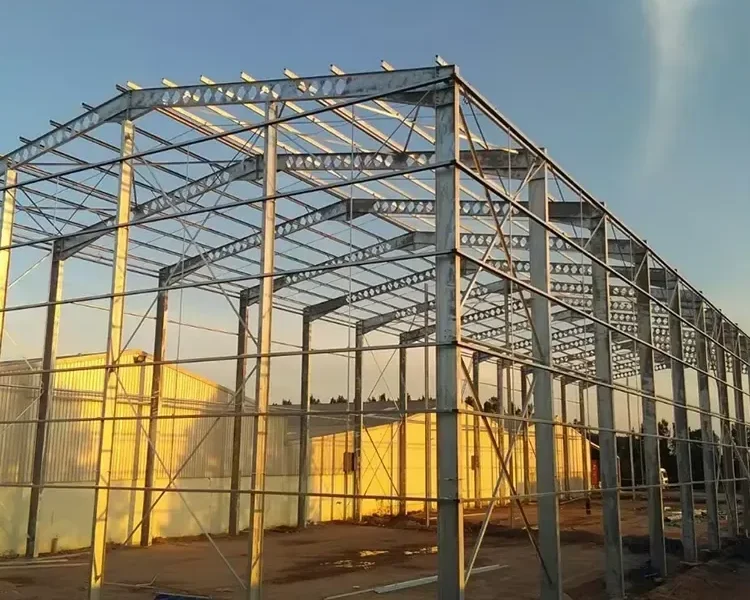
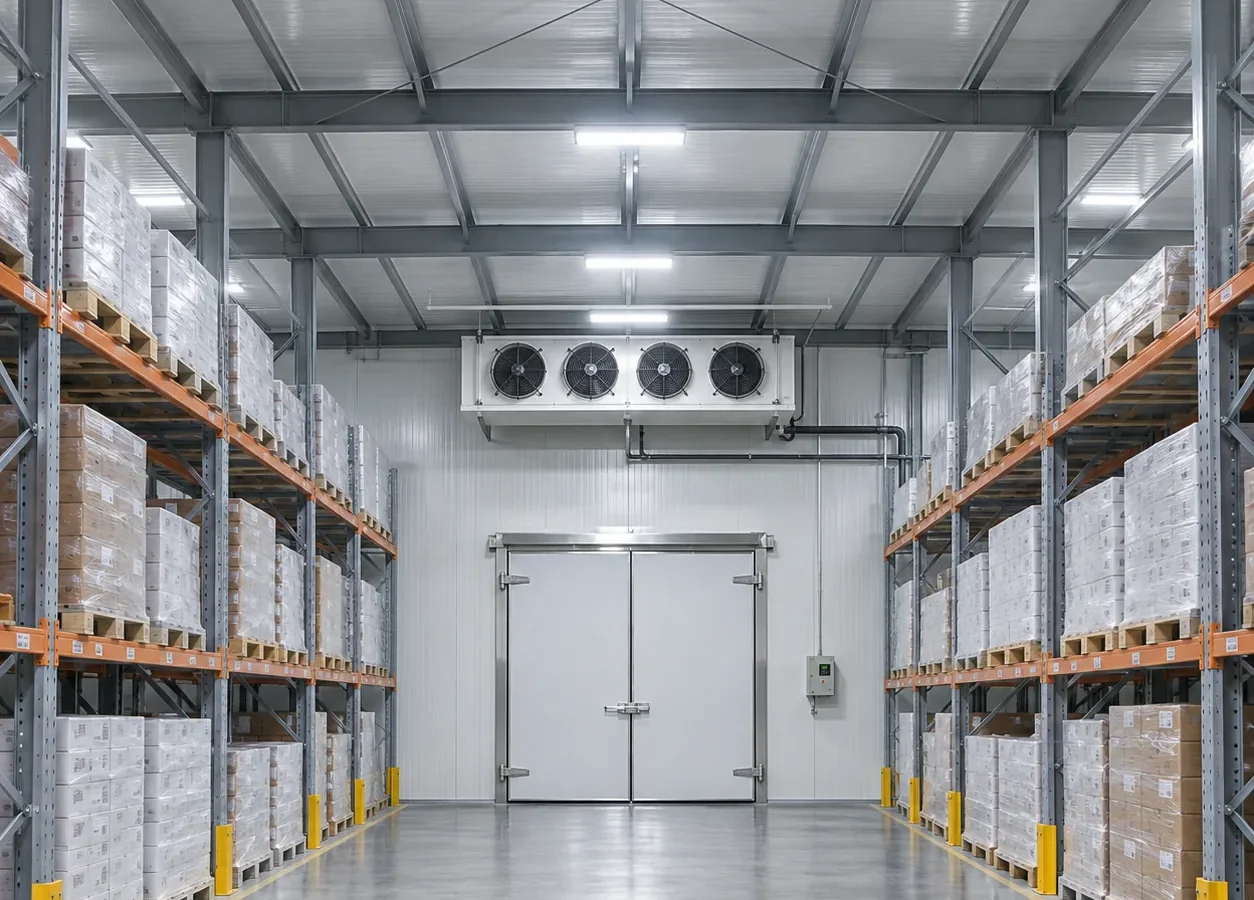
A steel cold store can hold chilled, frozen or deep-frozen conditions, but the temperature range is not created by the steel frame. The frame supports the room; insulation, air sealing, doors, floors and refrigeration maintain the environment. Planning should start with the product and the operation, then size the envelope around that duty.
Typical operating bands
Chilled rooms for produce, dairy, meat and pharmaceuticals commonly sit just above freezing. Frozen storage generally operates around −18°C, while deep-freeze or specialist applications can go to −25°C, −30°C or lower. These are starting points for discussion, not universal requirements. The product specification and local handling rules set the final setpoint and the permitted variation.
Holding a temperature is harder than reaching it
An empty room reaches its setpoint easily. The real test is a working day: warm product enters, doors open, forklifts pass through, defrost cycles run and staff move between zones. Each of those events adds heat or moisture. The building and refrigeration system must remove that gain while keeping the room stable.
This is why two facilities with the same setpoint can need different insulation and equipment. A holding freezer that receives already-frozen goods performs a different job from a blast freezer that must pull product temperature down on site.
The envelope, doors and floor
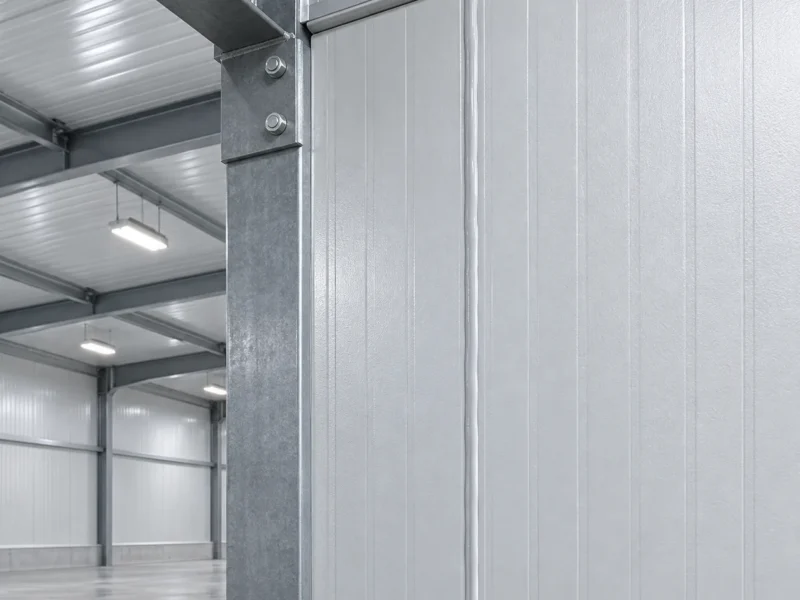
Insulation thickness, joint continuity, thermal breaks and air sealing control heat and moisture movement. Doors are the largest intentional opening in the envelope, so their size, opening frequency and speed matter as much as their insulation value. The floor needs insulation and moisture control, and in low-temperature rooms, a strategy to protect the ground from frost movement.
A single weak detail can dominate the energy bill. An unsealed penetration or a steel connection that bridges the envelope is a permanent heat path, regardless of how thick the panels are elsewhere.
Refrigeration capacity under real loads
Equipment selection should use the actual operating assumptions: outdoor design conditions, product entry temperature, daily throughput, door-opening pattern, occupancy, lighting and handling equipment. A quote that lists equipment without those inputs cannot be compared fairly with another.
Redundancy is a separate decision. A system designed to keep operating during a failure costs more than one without backup. The right choice depends on the value of the stored product and the consequences of a temperature excursion.
Define the brief before sizing steel
Send SDKM the temperature range, room layout, product type, throughput, door traffic, floor loads and site conditions. The steel package can then be coordinated with the insulated envelope and the refrigeration design instead of being priced against an assumed duty.