 01
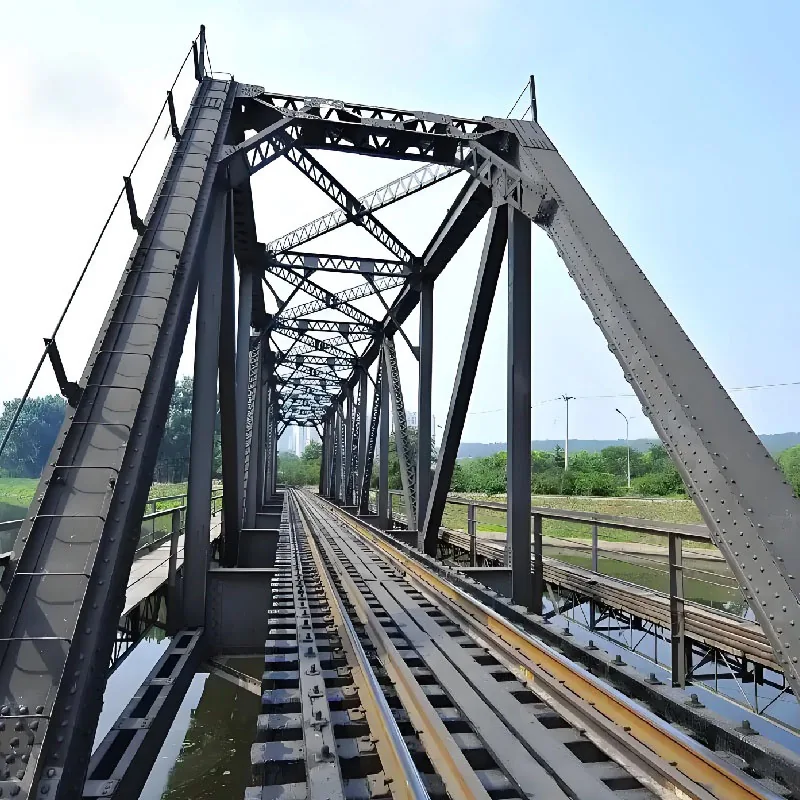
Heavy-Duty Bailey Bridge
A portable modular truss bridge assembled from standard panels. Single, double or triple truss configurations for temporary crossings, construction access, emergency routes and remote sites.
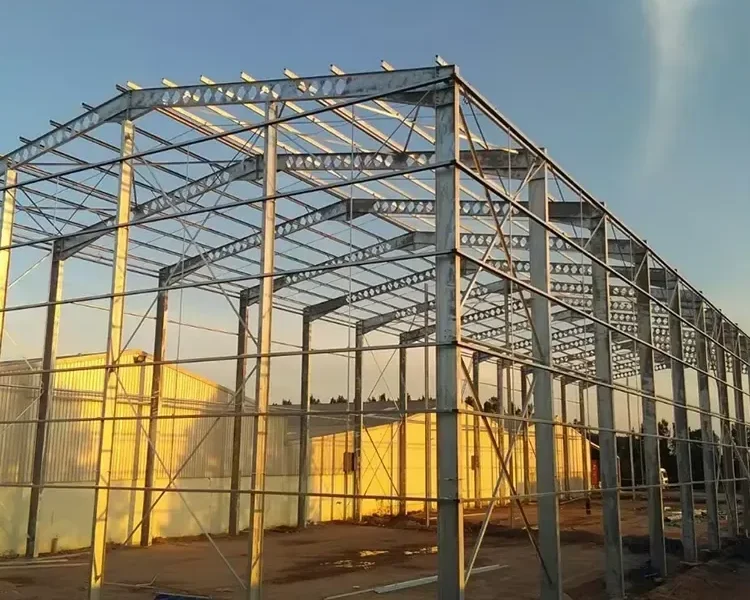 Industrial Steel Structures01 / Crane-ready · Heavy-duty
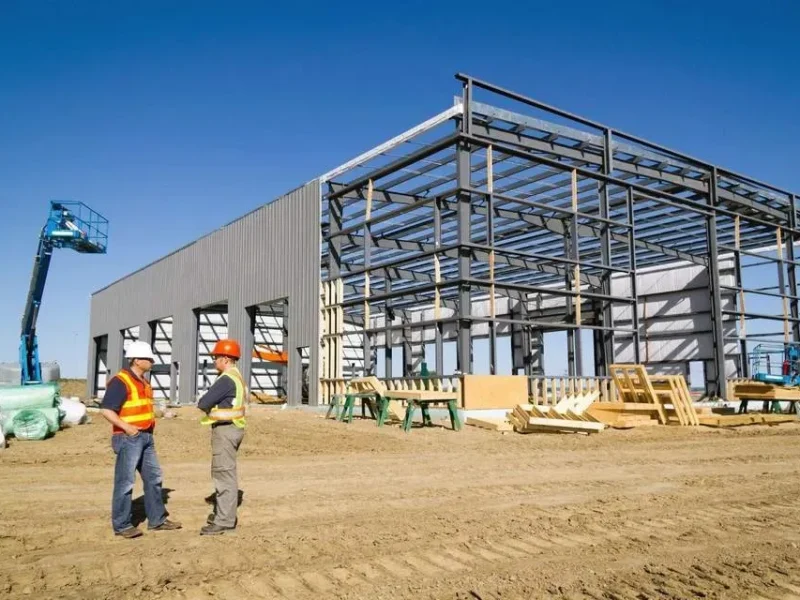 Steel Structure Warehouse02 / High-bay · Logistics
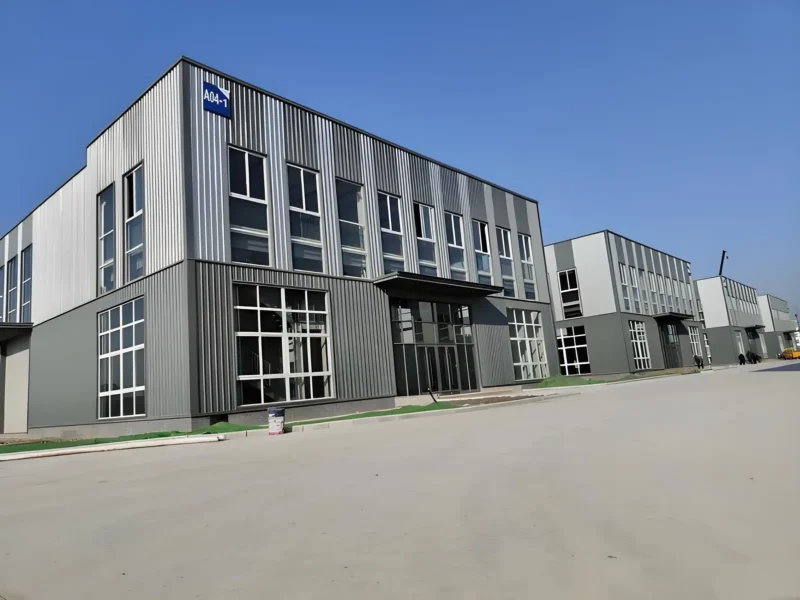 Multi-Storey Steel Structures03 / Open plates · Vertical
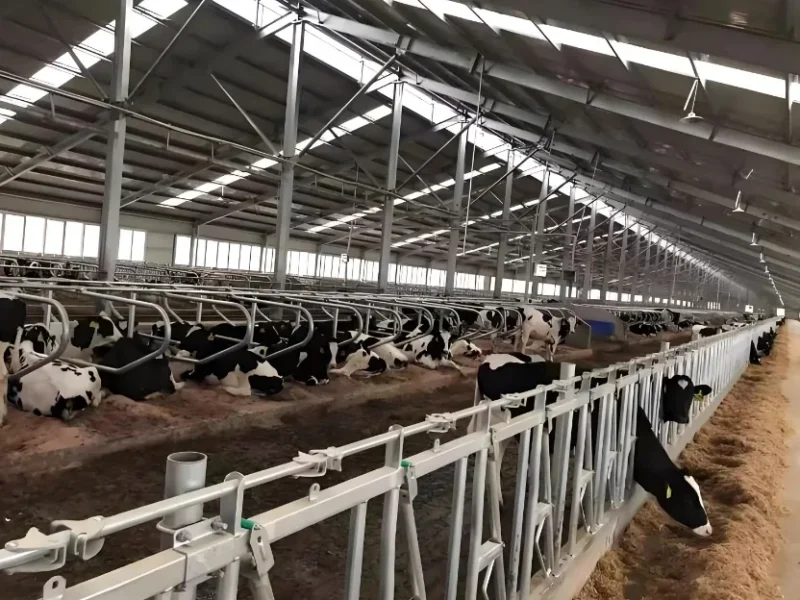 Agricultural Steel Buildings04 / Silos · Livestock
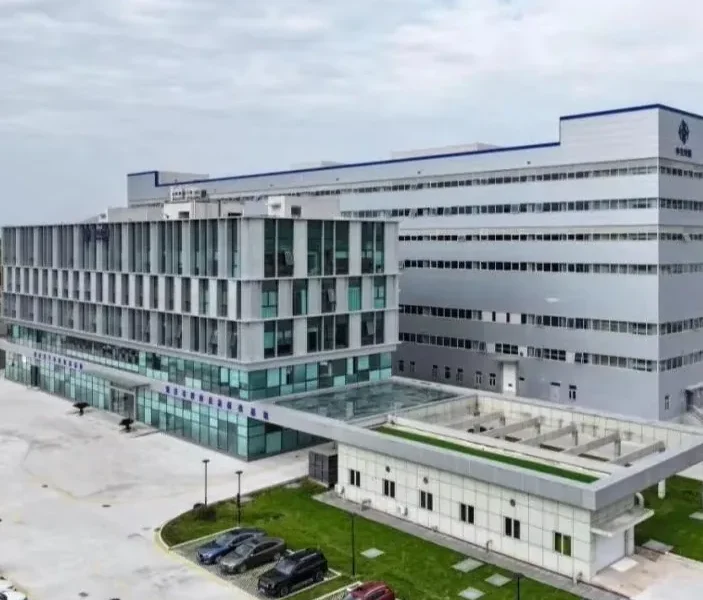 Cold Storage Steel Structures05 / Insulated · −40°C
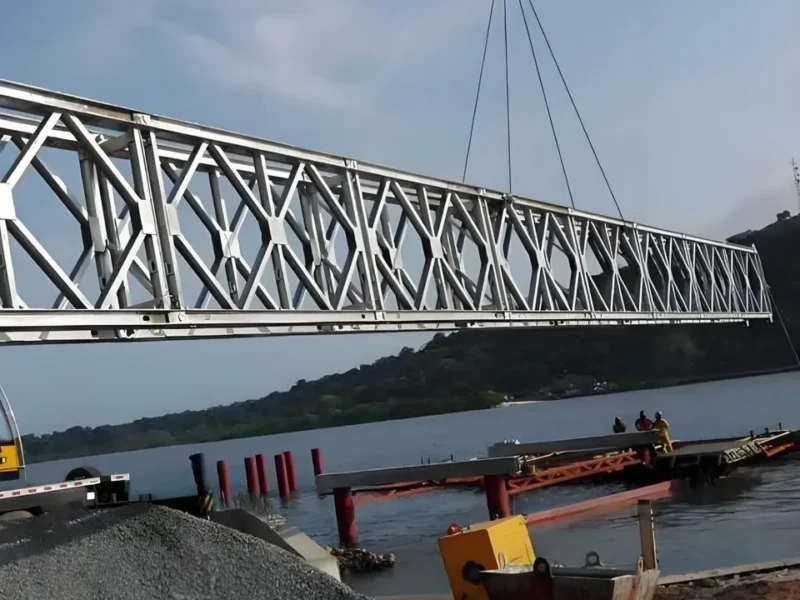 Bridge Steel Structures06 / Modular · Highway
Span, crane load, cold-chain temperature, site access — tell us what the building has to do. An engineer will respond within one business day.
Talk to an engineerA steel bridge is designed twice: once for the load it carries, and once for the route it takes to the site. Segmentation, lifting points and connection details decide whether the bridge arrives buildable.
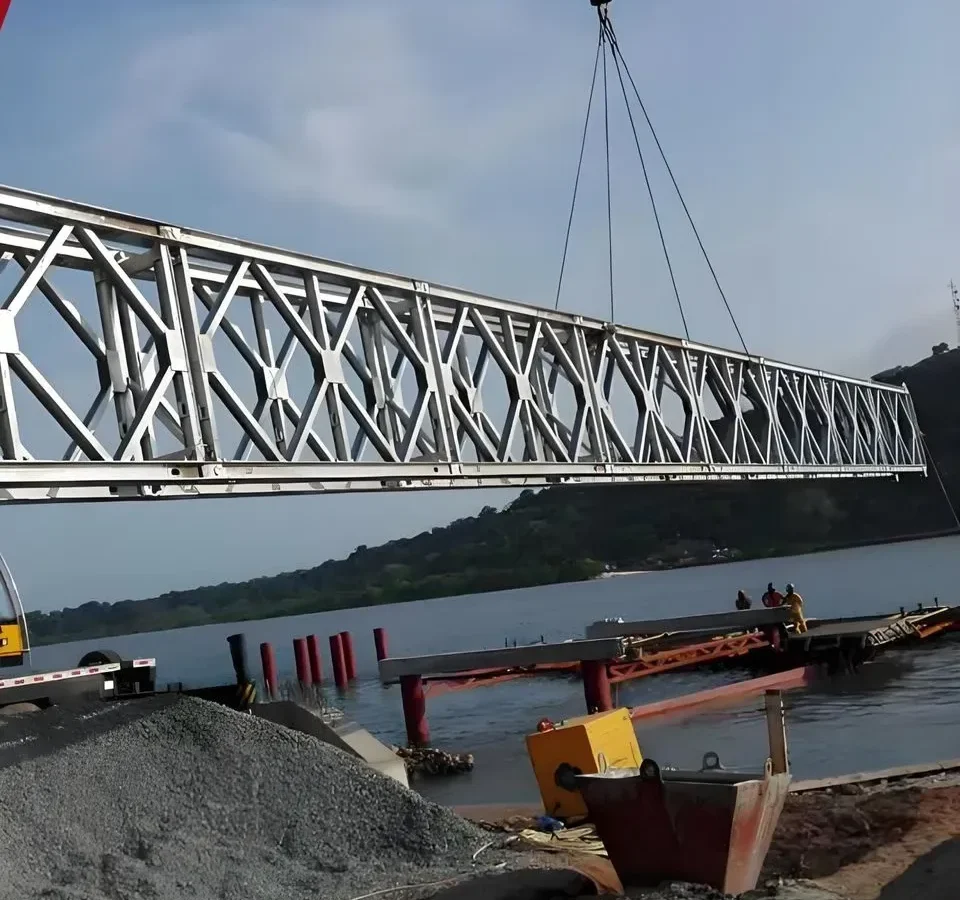
Three details are enough to start. An engineer reviews the brief and replies within one business day.
Bridge fabrication is driven by two sets of constraints. The first is structural: span, loading, fatigue, bearings and the governing design code. The second is logistical: transport length, weight, site access, lifting capacity and the assembly sequence available at the crossing.
SDKM resolves both before cutting steel. Members are segmented to suit the transport route, trial-assembled where geometry demands it, and marked so the site team can follow a connection sequence rather than improvise one.
A category is a brief, not a fixed catalogue item. These are the configurations we engineer most often; the final frame follows your span, loads and site.
01
A portable modular truss bridge assembled from standard panels. Single, double or triple truss configurations for temporary crossings, construction access, emergency routes and remote sites.
 02
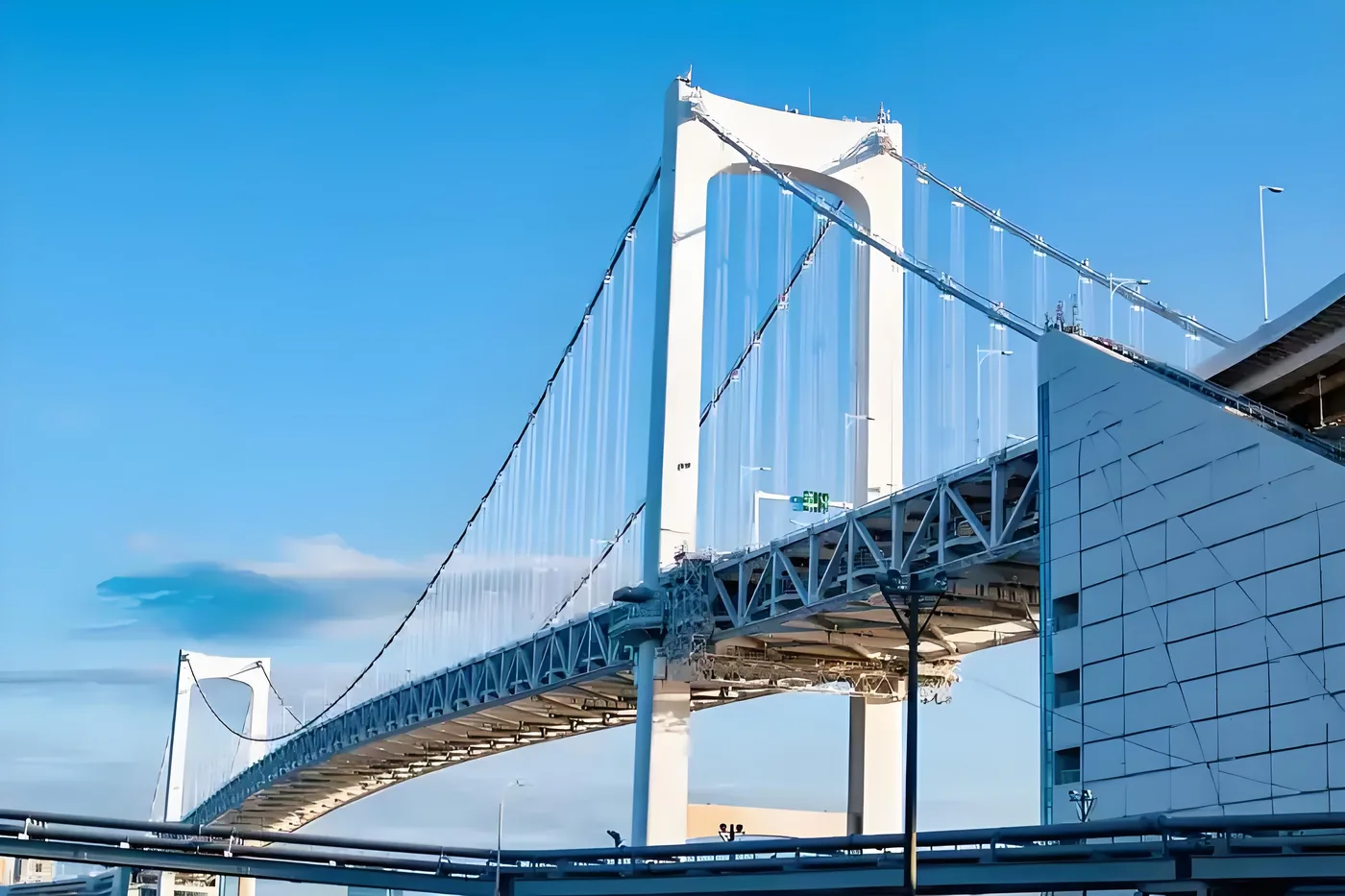
Plate girders, cross-bracing and connection components fabricated to transport limits. Welding procedures, NDT and coating are documented per the project’s bridge specification.
 03
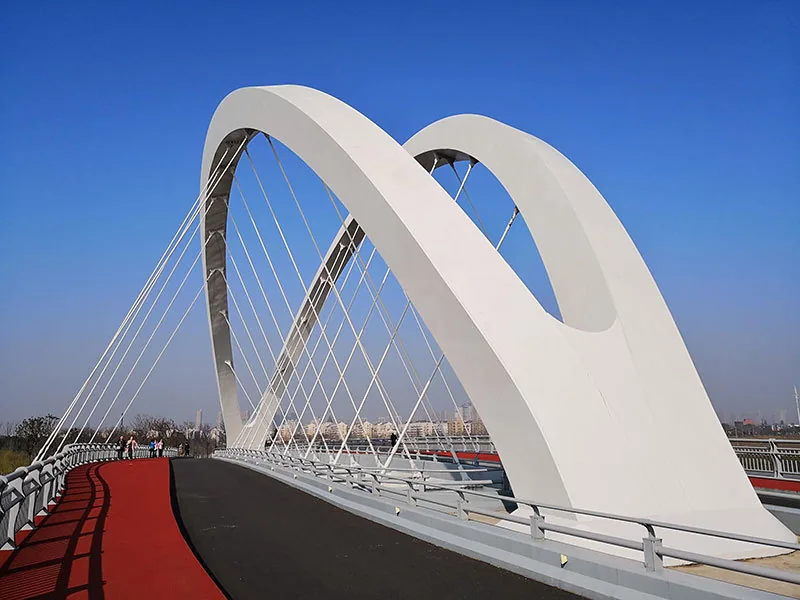
Pedestrian and light-vehicle bridges where structural reliability and visual identity matter together. Truss or arch forms are detailed for the site, the finish and the installation method.
None of these are catalogue defaults. Each one is agreed from the project brief, then fixed in the design basis and connection drawings.
Send your parametersThe same frame family can serve very different operations. The layout and envelope change; the engineering discipline does not.
The scope is agreed before fabrication. Nothing is cut until the drawings, coatings, packing plan and site sequence are aligned.
Loads, spans, code, crane duty, racking or temperature range are fixed and reviewed with your engineer.
Shop drawings, connection details, bolt lists and erection sequence are issued before steel is cut.
CNC cutting, fit-up, welding and trial assembly, with hold-point inspection records.
Surface preparation, coating system, bundle marks and export packing planned against the site sequence.
Erection drawings, marked assemblies and remote or on-site guidance for the bolt-up phase.
Final split is fixed in the offer, before fabrication.
If your question is not here, send it with the project brief. We answer with the engineering reason, not a sales line.
Yes. Segmentation is planned around the transport route and the lifting equipment at site. Connection details, splice positions and trial assembly requirements are set before fabrication so the modules arrive in the right order.
Bridge work is commonly specified to AASHTO, Eurocode, AS/NZS, BS or DIN. The governing standard, weld acceptance level, NDT extent and coating system are confirmed in the technical specification before production.
We provide marked assemblies, erection drawings and a connection sequence. Site supervision or specialist erection crews can be included in the scope when the crossing or lifting conditions require it.
The coating system is selected for the exposure environment — inland, coastal, marine or de-icing salt — and for the maintenance access available over the bridge’s life. Dry film thickness and surface preparation are recorded.
Question not covered? Send it with the brief or WhatsApp an engineer.
Span, load, temperature, site access, code, timeline — whatever is fixed. An engineer reviews it and comes back with the questions that matter and a route to quotation.