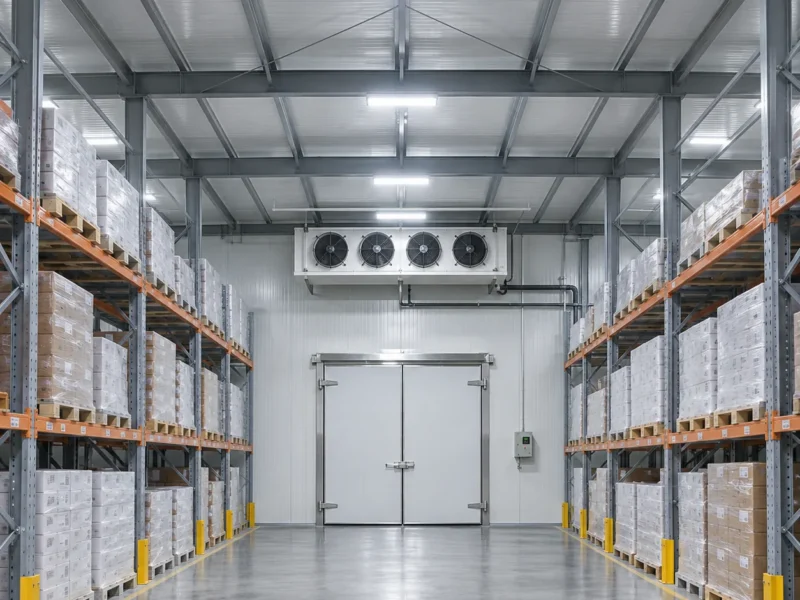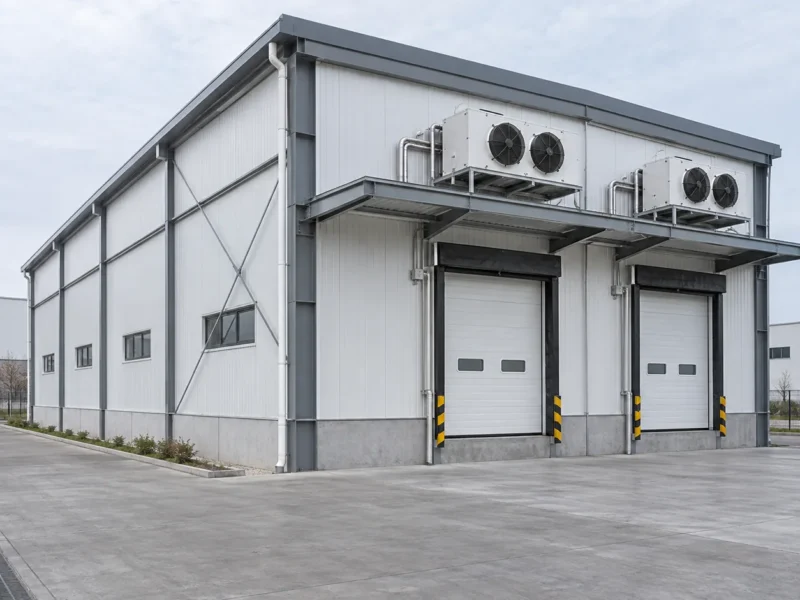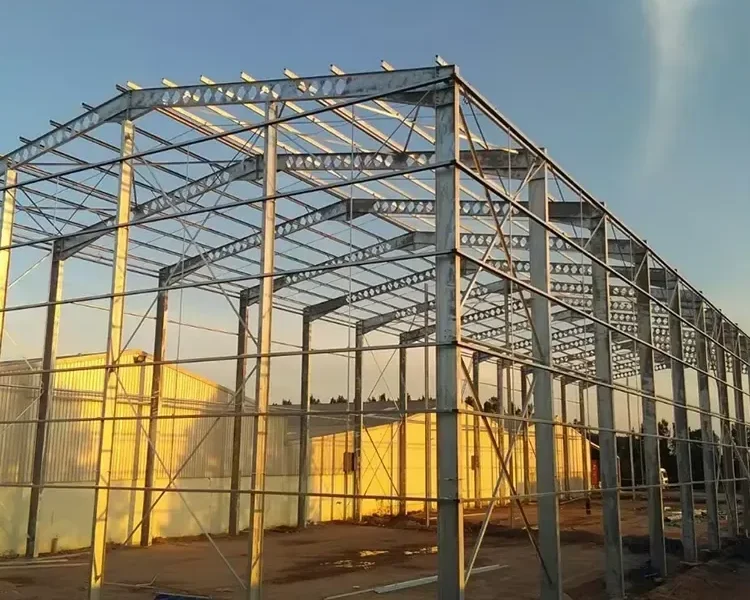

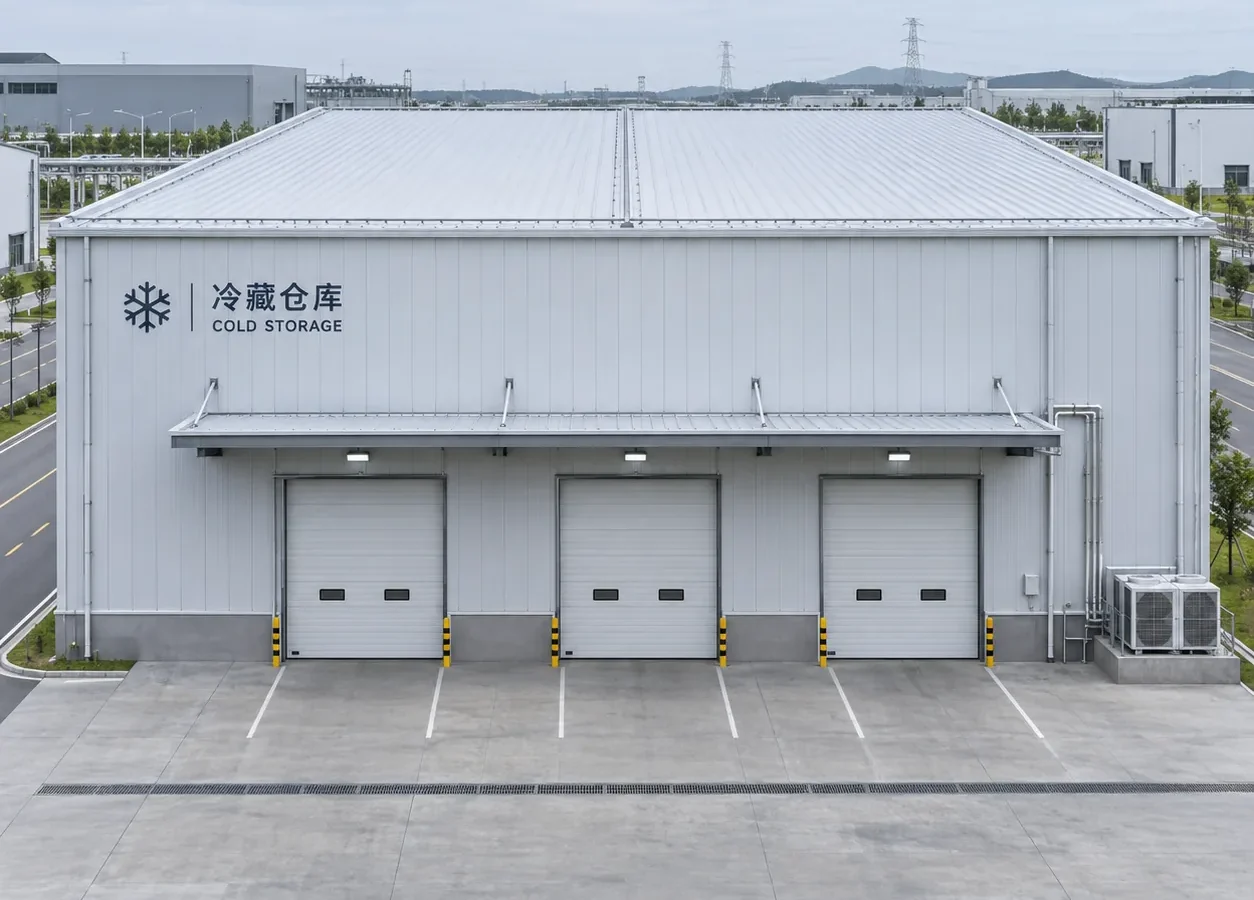
A steel-framed cold store can be highly efficient, but not because it is steel-framed. Efficiency comes from a continuous insulated envelope, controlled air and vapour movement, well-detailed doors and a refrigeration system selected for the real load. Any one of those can undo the others.
Heat does not only pass through the panel
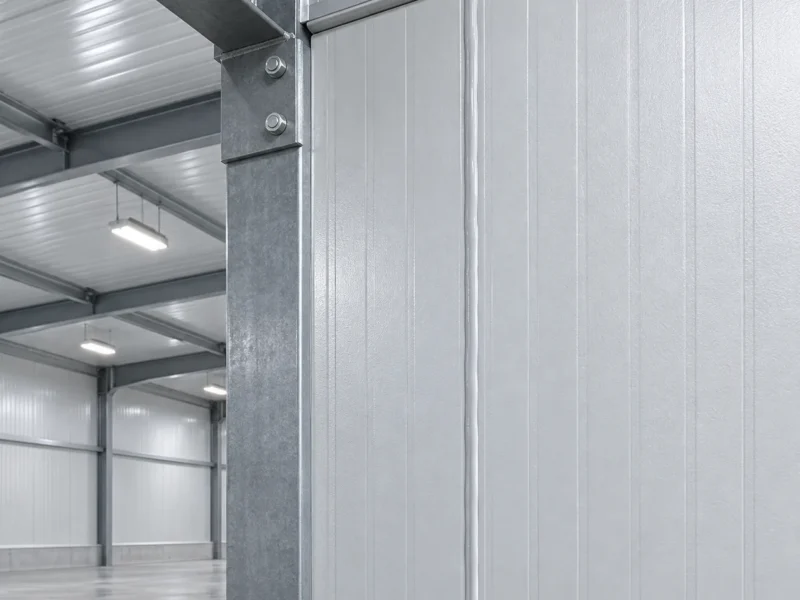
Heat enters a cold store through walls, roof, floor, doors, penetrations and air exchange. Insulation reduces conduction, but air leakage and thermal bridges bypass it. A steel member that connects the warm exterior to the cold interior is a conductor, even when the surrounding panel is thick.
That does not make steel frames inefficient. It makes thermal-break detailing necessary. The structure and the envelope must be designed as one assembly, with every crossing detailed before fabrication.
Continuity beats nominal thickness
Panel joints, corners, fixings, door frames, pipe openings and floor junctions all interrupt the insulated surface. If those details are not sealed and thermally broken, the declared panel performance is not what the building achieves. A continuous 120 mm envelope usually outperforms a 150 mm envelope with uncontrolled gaps.
Airtightness and vapour control work together
Air carries moisture. When warm, moist air leaks into a cold assembly, it can condense, freeze and wet the insulation. That reduces performance and starts corrosion on concealed steel. The vapour control layer and the air-sealing details should be planned together, inspected before they are covered, and protected during later trades.
Doors are an operational heat load
Door openings are planned events, not accidents. Their size, opening speed, traffic frequency and protection determine how much warm air enters. High-traffic loading areas may justify fast doors, air curtains, strip curtains or a separate buffer zone. The right answer depends on the operation, not on a catalogue default.
Refrigeration must match the building
Equipment selection should use the same assumptions as the envelope design: outdoor conditions, product load, door traffic, occupancy, lighting and defrost strategy. Controls then determine how the system responds to real demand instead of running at a fixed output.
Comparing operating cost is only meaningful when electricity tariff, operating schedule, climate and product load are the same. SDKM coordinates the structural and envelope scope with the refrigeration contractor so those assumptions are shared rather than guessed.