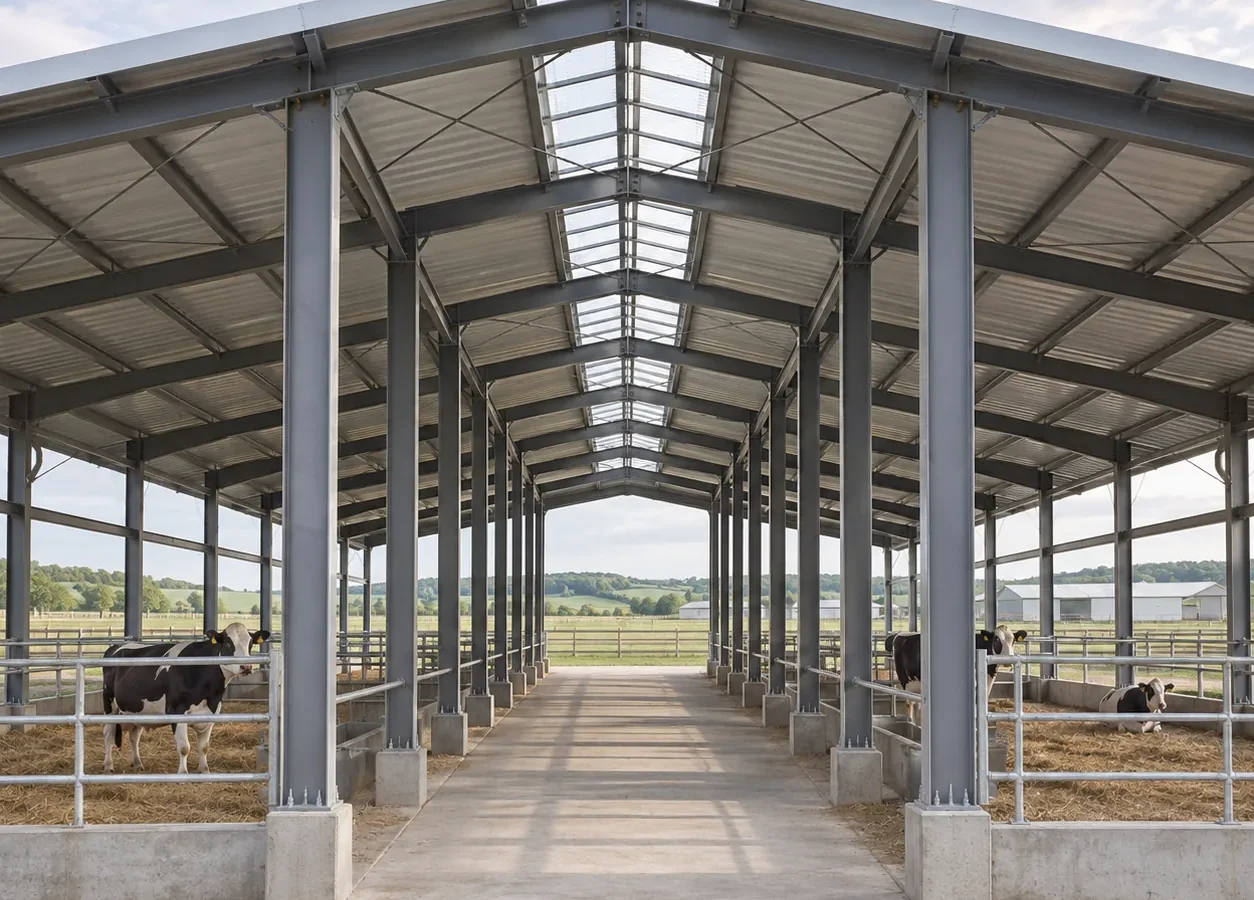
A well-designed livestock building can serve for 30 to 50 years or more. That range depends on the internal environment as much as the external climate. Ammonia, moisture, dust, washdown and continuous use attack different parts of the building at different rates.
What the lifespan figure includes
The primary frame is designed to carry loads and may remain serviceable for decades. Cladding, gutters, fixings, seals and doors perform different jobs and may need repair or replacement sooner. A building can be structurally sound while its envelope is nearing the end of its life.
Where deterioration starts
Look at the roof, the eaves, the area around openings and any surface exposed to ammonia or washdown. Moisture combined with ammonia is aggressive to unprotected steel. Fixings and cut edges are often the first points of corrosion because they receive less coating and collect water.
Drainage matters too. A blocked gutter or a detail that traps water can create a permanent wet zone, even in a dry climate.
Ventilation protects the structure
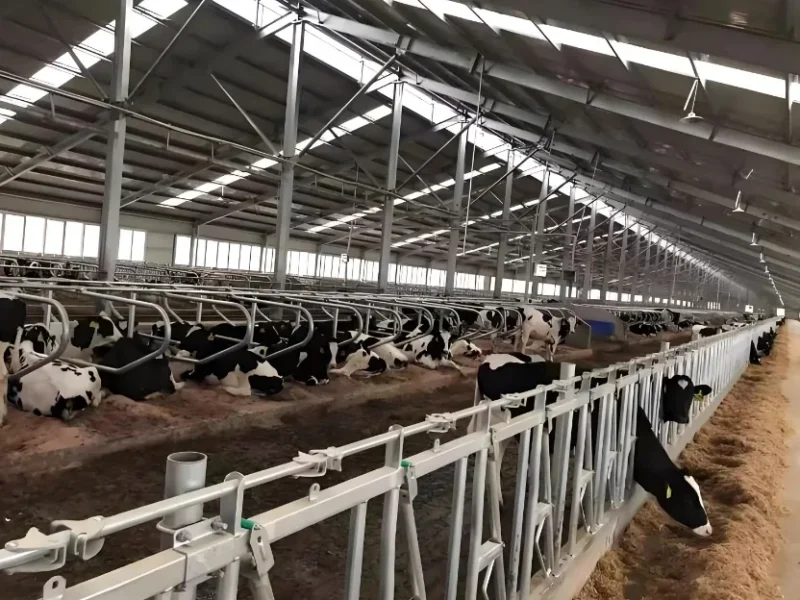
Ventilation is usually discussed in terms of animal health, but it also protects the building. Removing moisture reduces condensation on cold surfaces. Keeping air moving prevents stagnant humid zones. An insulated roof and controlled air leakage reduce the chance of warm moist air meeting a cold steel surface.
In cold weather, ventilation cannot simply be switched off. Reduced but continuous air exchange is usually better than closing the building and letting humidity rise.
Is galvanizing enough?
Galvanizing is a strong base protection, but it is not a universal answer. The coating system should match the internal environment, the cleaning chemicals and the expected life. In severe ammonia exposure, additional protection or a different detailing strategy may be needed.
Details that are hard to fix later
Roof pitch, eaves details, service penetrations, door thresholds and the interface between slats or slurry channels and the structure are difficult to change after construction. They should be resolved with the ventilation and cleaning strategy, not added later.
A maintenance routine that finds problems early
Walk the building after each production cycle. Check gutters, roof sheets, fixings, door seals and any signs of moisture or corrosion. Keep a record of what was repaired. Small issues are cheaper than a full envelope replacement.
SDKM designs agricultural buildings with the internal environment in mind, selecting protection and details that can be maintained by the farm team rather than requiring specialist access.