

Most cold-store failures begin with moisture in the wrong place. Warm air holds more water vapour than cold air. When that air reaches a cold surface or enters an insulated assembly, it can condense, freeze and gradually destroy the performance of the envelope. A vapour control layer is the tool that keeps that movement under control.
Which side does the barrier go on?
In a cold store, the warm side is normally outside the insulated envelope. The vapour control layer therefore belongs on the warm side of the insulation, where it can stop moisture-laden air before it reaches a cold surface. In a freezer, the same principle applies, but the consequences are more visible: leaking vapour becomes frost, then ice, then wet insulation.
The exact assembly depends on the panel system, the climate and whether the room sits inside a larger building. A chilled room, a deep-freeze room and a dual-temperature facility should not be assumed to share one detail.
Steel cladding alone is not a vapour barrier
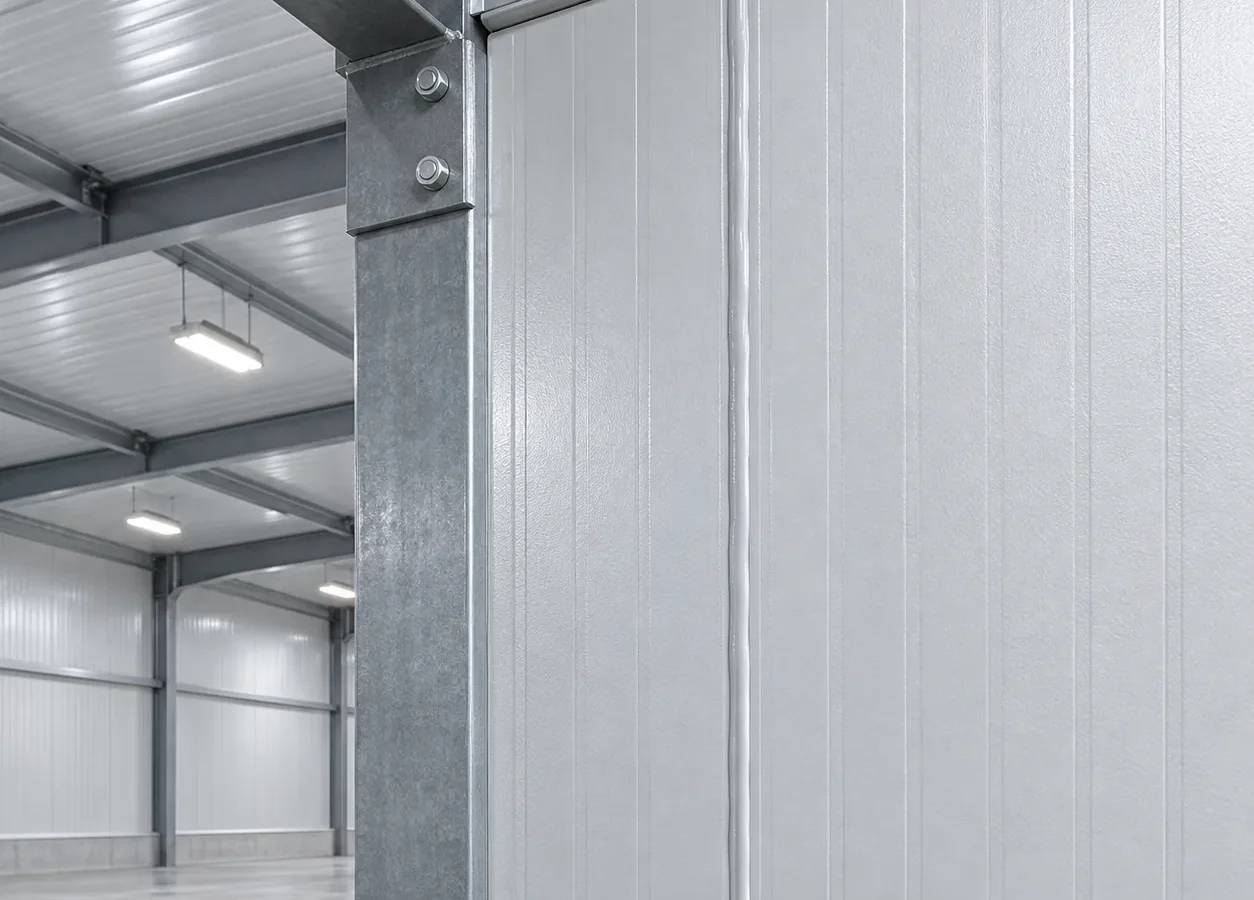
A metal skin is resistant to air in one sense, but it is not a continuous vapour-control layer. Joints, fixings, openings, door frames and service penetrations interrupt it. The barrier has to be designed as a system with sealed laps, compatible tapes and membranes, and a clear sequence for closing every penetration.
This is also why a single sheet of plastic specified without installation detail is not enough. Continuity is the performance. A barrier that is ninety-five percent complete is not ninety-five percent effective at a cold bridge.
The details that fail first
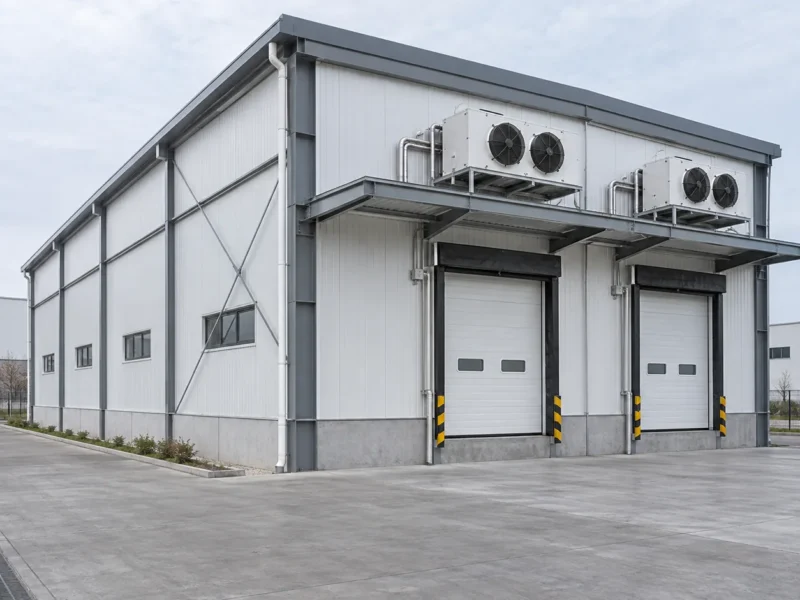
Look at door thresholds, panel-to-floor junctions, refrigerant pipe penetrations, electrical boxes, drainage outlets and any steel member that crosses the envelope. These are the places where warm air finds a path and where condensation or ice appears first. They should be resolved on the drawings before panels are ordered.
If frost or damp patches have already appeared, start with the coldest surface and work backward: damaged seals, gaps at penetrations, a missing vapour layer behind a service opening, or a thermal bridge through the frame. Repainting the surface will not fix a moisture path.
Plan the vapour-control work before construction
Vapour control is a sequence, not a material order. The barrier has to be installed before the cold side is closed, inspected before it is covered, and protected during later trades. On an export project, those steps belong in the erection guide so the site team knows which layer goes where and which joints must be inspected.
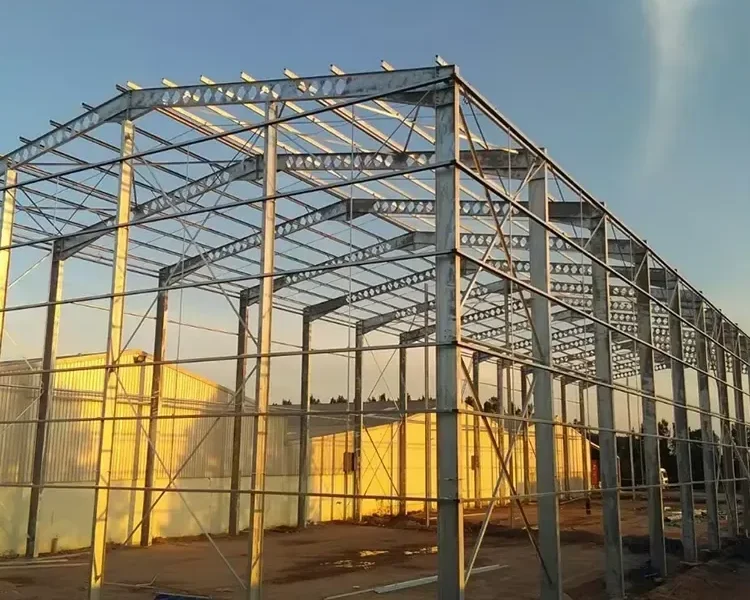
SDKM coordinates the steel frame with the panel, floor and door interfaces. The vapour-control strategy is agreed with the envelope supplier before fabrication so the structural details and the thermal details describe the same building.