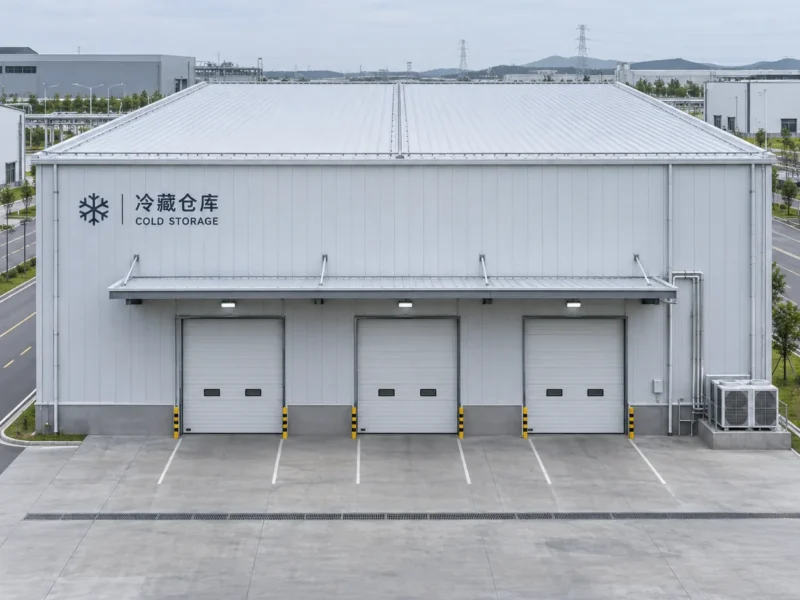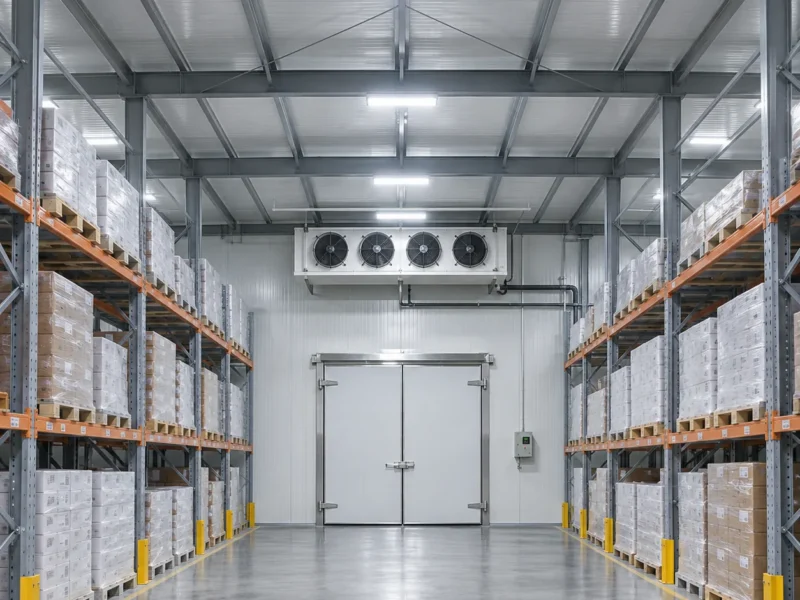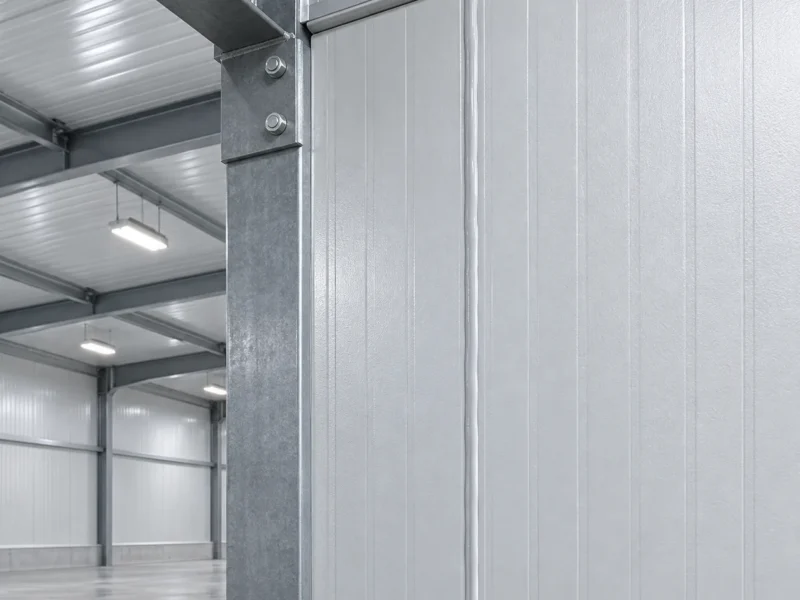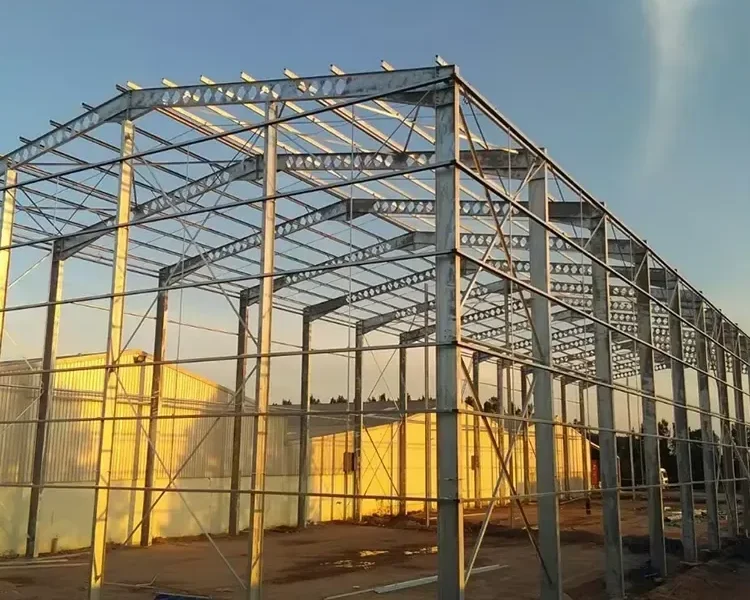
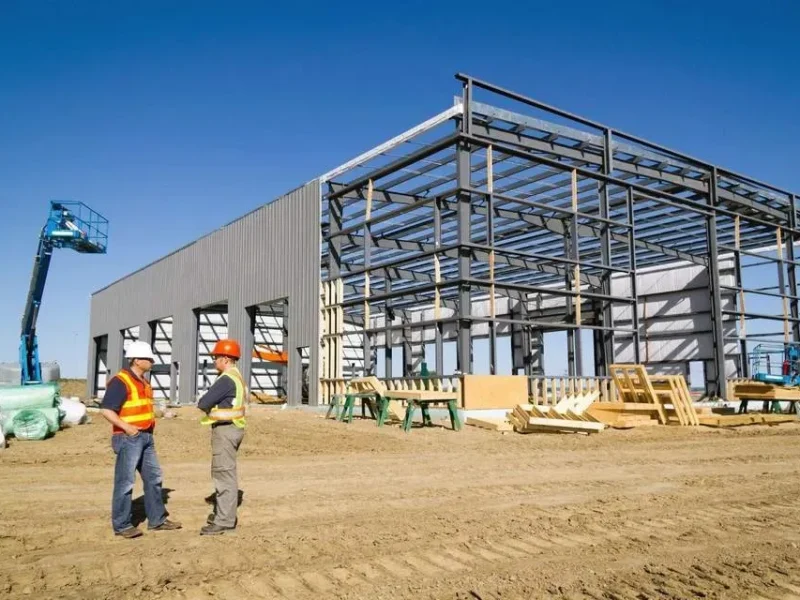
A steel structure can support a cold store operating at −30°C, provided the frame, connections, envelope and foundation are designed for the temperatures they will experience. The room setpoint alone does not determine the steel specification.
Does steel become brittle at −30°C?
Some structural steels lose fracture toughness as temperature falls. That does not mean every member fails at −30°C. It means the combination of low temperature, stress, thickness and detailing must be assessed. For critical members, a steel grade with tested low-temperature toughness may be specified.
The right approach is to define the service temperature of each part of the structure. A member inside the insulated envelope may never reach the room setpoint. A member that crosses the envelope may.
Does the whole frame need low-temperature steel?
Not necessarily. The design should identify where low temperature and stress coincide. Columns, connections and any exposed steel at the cold side deserve particular attention. The specification should follow the actual thermal exposure, not a blanket assumption.
Thermal breaks and airtightness
At −30°C, every uncontrolled path matters. Steel is conductive, so a connection that bridges the envelope becomes a heat path and a condensing surface. Thermal breaks, vapour control and airtightness details must be continuous and buildable.
Warm moist air entering the assembly can freeze, wet the insulation and corrode concealed steel. The vapour barrier and air seal are as important as panel thickness.
The floor beneath the room
A −30°C room can freeze the ground below it. The floor assembly may need insulation, a moisture-control layer and a frost-protection strategy such as a heated sub-slab or a ventilated void. The correct solution depends on ground conditions and the local climate.
Door thresholds are another critical interface. The floor insulation, structural slab, seal and traffic surface must connect without creating a thermal bridge or a weak edge under forklift loads.
Is prefabricated steel suitable?
Yes, when the cold-side details are engineered. Prefabrication improves dimensional control and coating quality, but it does not replace the thermal design. The steel package, panels, floor and refrigeration scope must be coordinated.
SDKM reviews the operating temperature, the envelope strategy and the floor interface before sizing members, so the frame and the cold room describe the same building.