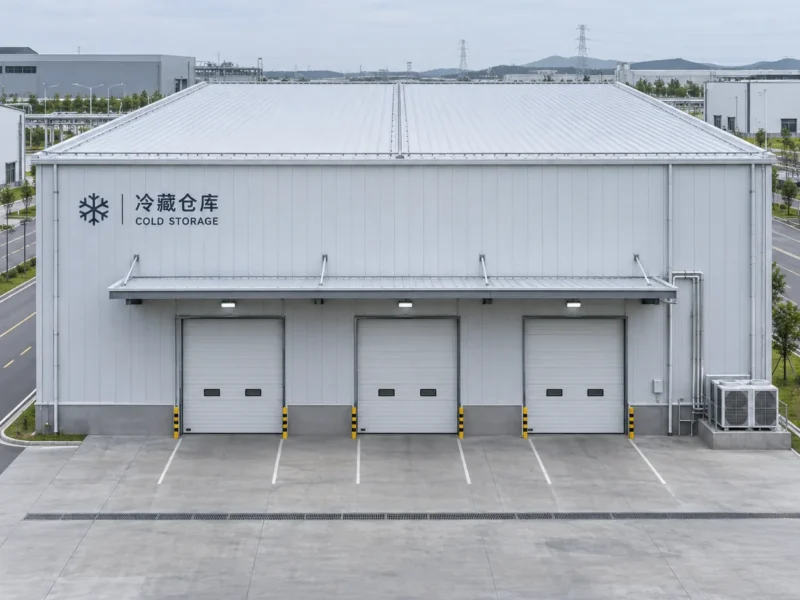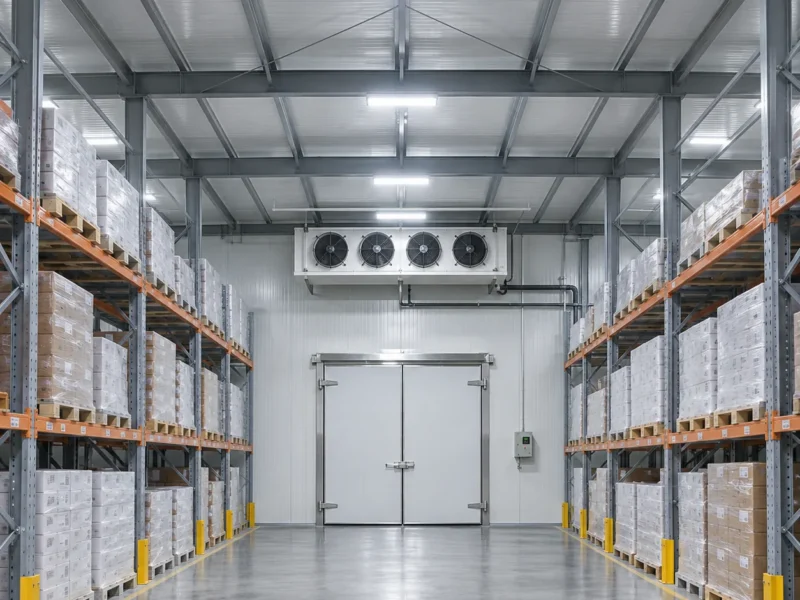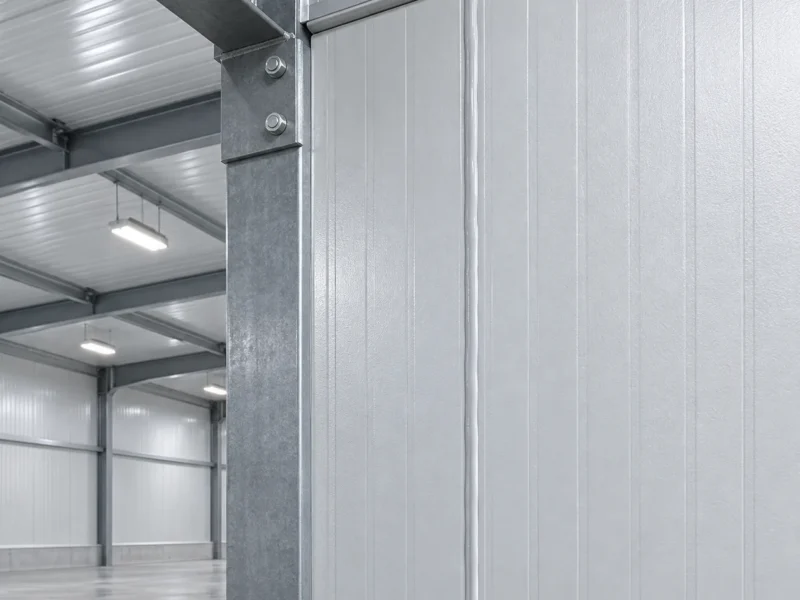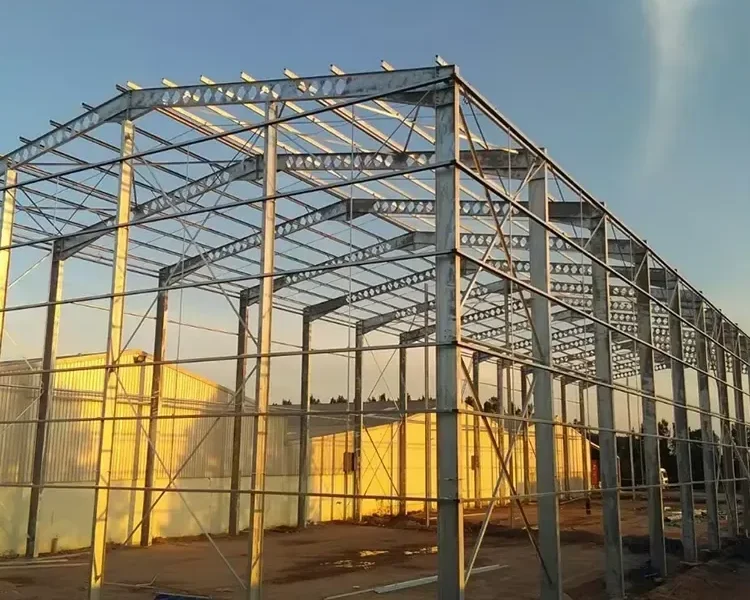


A cost per square metre for a steel cold store is only useful when the scope behind it is written down. Two quotes can carry the same headline rate while one covers a bare steel frame and the other includes insulated panels, a refrigerated floor and doors. Before comparing numbers, define the boundary of each offer.
Start with the scope, not the rate
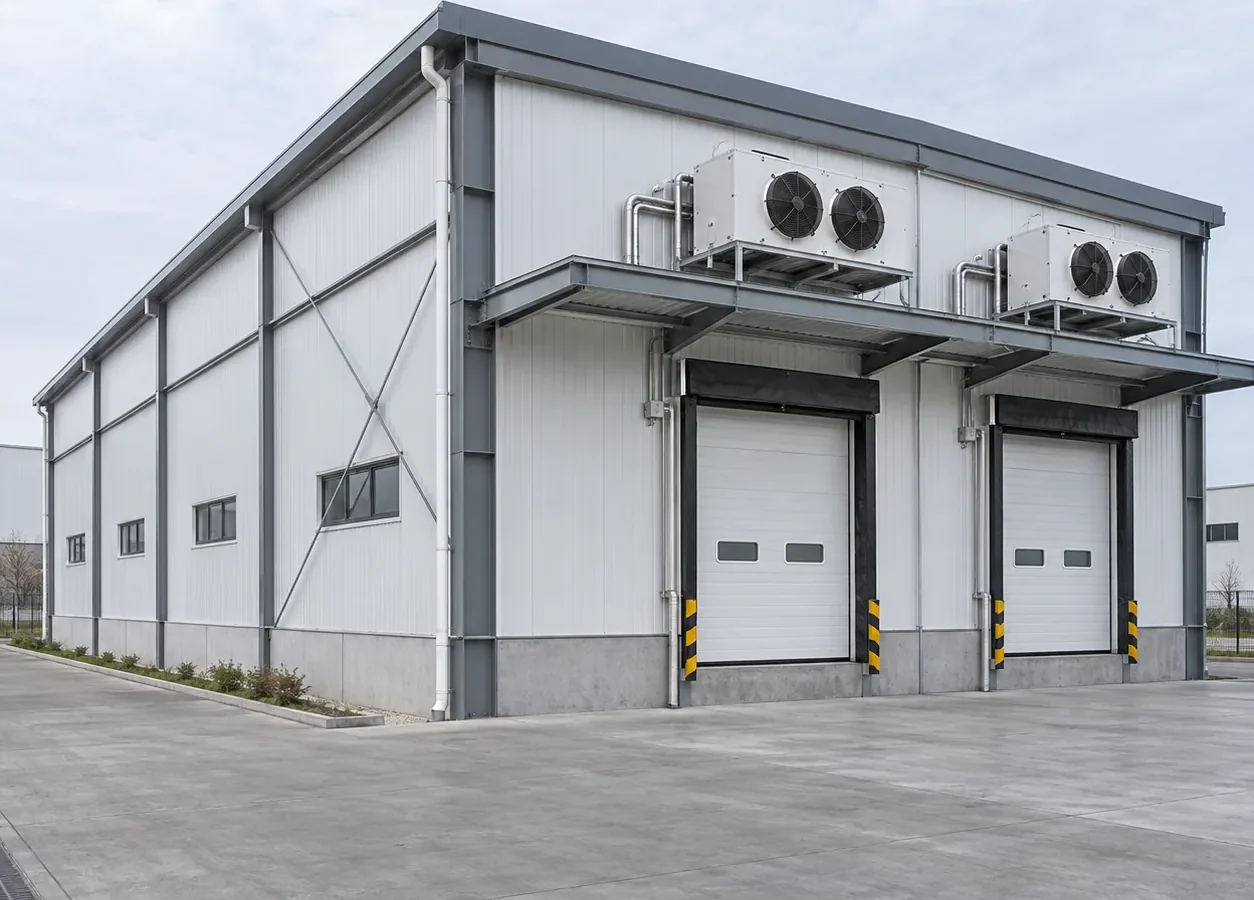
Cold storage is assembled from several packages: primary and secondary steel, PU or PIR panels, the insulated floor, doors, refrigeration, electrical work, drainage and installation. A frame-only price is not comparable with a completed, operating facility. Ask each supplier to list what is included and what is excluded, then divide the adjusted total by the same floor area.
Use one definition of area as well. An external footprint includes wall thickness, service rooms and loading docks. A refrigerated floor area does not. The difference can be ten percent or more, which is enough to reverse a comparison.
Temperature changes the specification
A chilled produce store and a deep-freeze facility may share a similar steel frame, but they do not share the same envelope. Lower temperatures usually mean thicker insulation, more robust vapour control, heated or protected door thresholds and different refrigeration capacity. Product entry temperature, daily throughput and door traffic also change the refrigeration load.
That is why a single rate per square metre across a range of cold stores is misleading. The setpoint is a design input, not a marketing category.
Insulation and floor details carry hidden cost
Panel thickness is only one part of the envelope. Joint profiles, fixings, penetration seals and the way panels meet the floor and doors determine whether the insulated surface remains continuous. A low panel price can disappear once those interfaces are detailed properly.
The floor is another major item. A cold-store slab is a structural and thermal assembly: it carries racking and forklift loads, includes insulation and moisture control, and may need frost protection beneath the slab. Thresholds at doors must connect the floor insulation, slab and traffic surface without creating a bridge or a weak edge.
Freight, installation and refrigeration
Factory pricing often stops at the loading bay. Packaging, inland transport, sea freight, insurance, unloading, site erection and commissioning can sit outside the steel quote. Refrigeration is usually priced separately, and its scope should identify equipment, controls, piping, insulation, drainage and commissioning.
To build a comparable rate, request separate prices for each package, add exclusions as allowances, and compare the same delivery term and currency. A rate is a budgeting tool, not a contract price. The defined scope is what the project actually buys.
What SDKM needs to quote a cold store
Send the operating temperature range, room dimensions, clear height, racking loads, door sizes and traffic pattern, the site country, the governing code and the expected completion window. With those inputs, the steel package can be sized and the interfaces with panels, floors and refrigeration can be defined before fabrication begins.