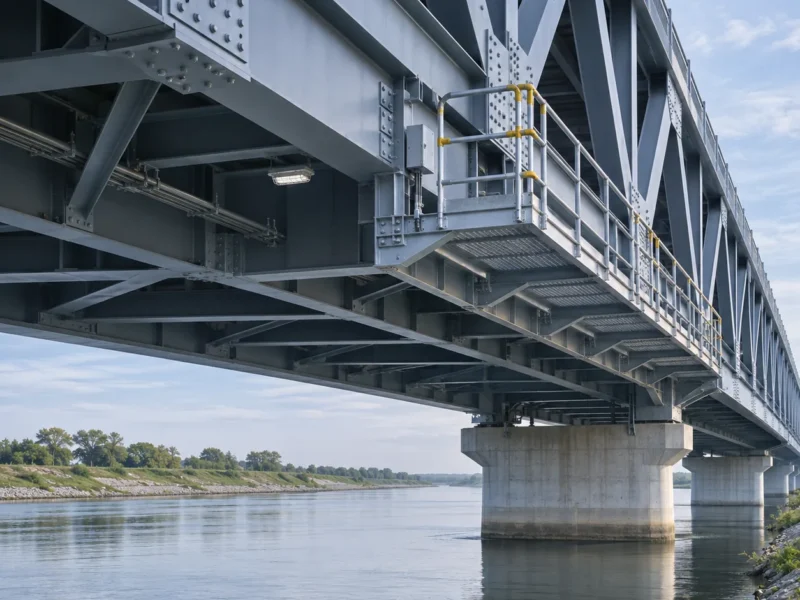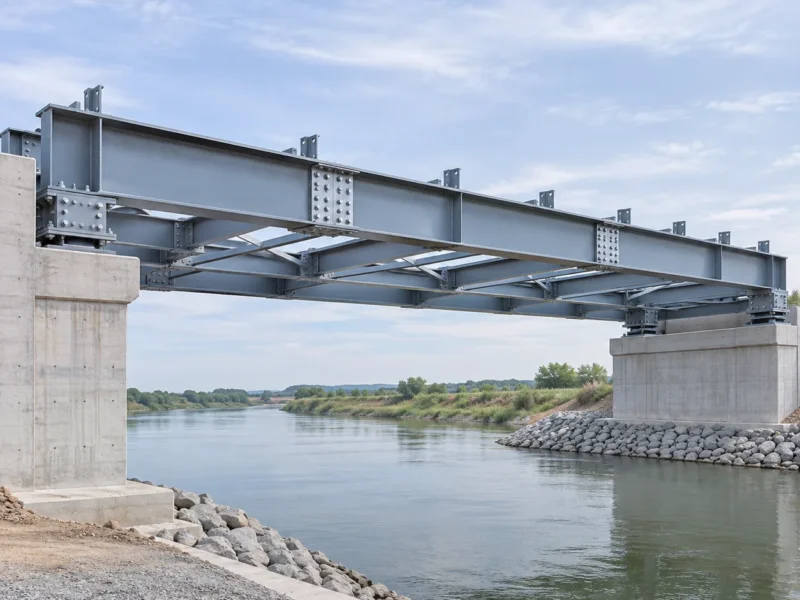


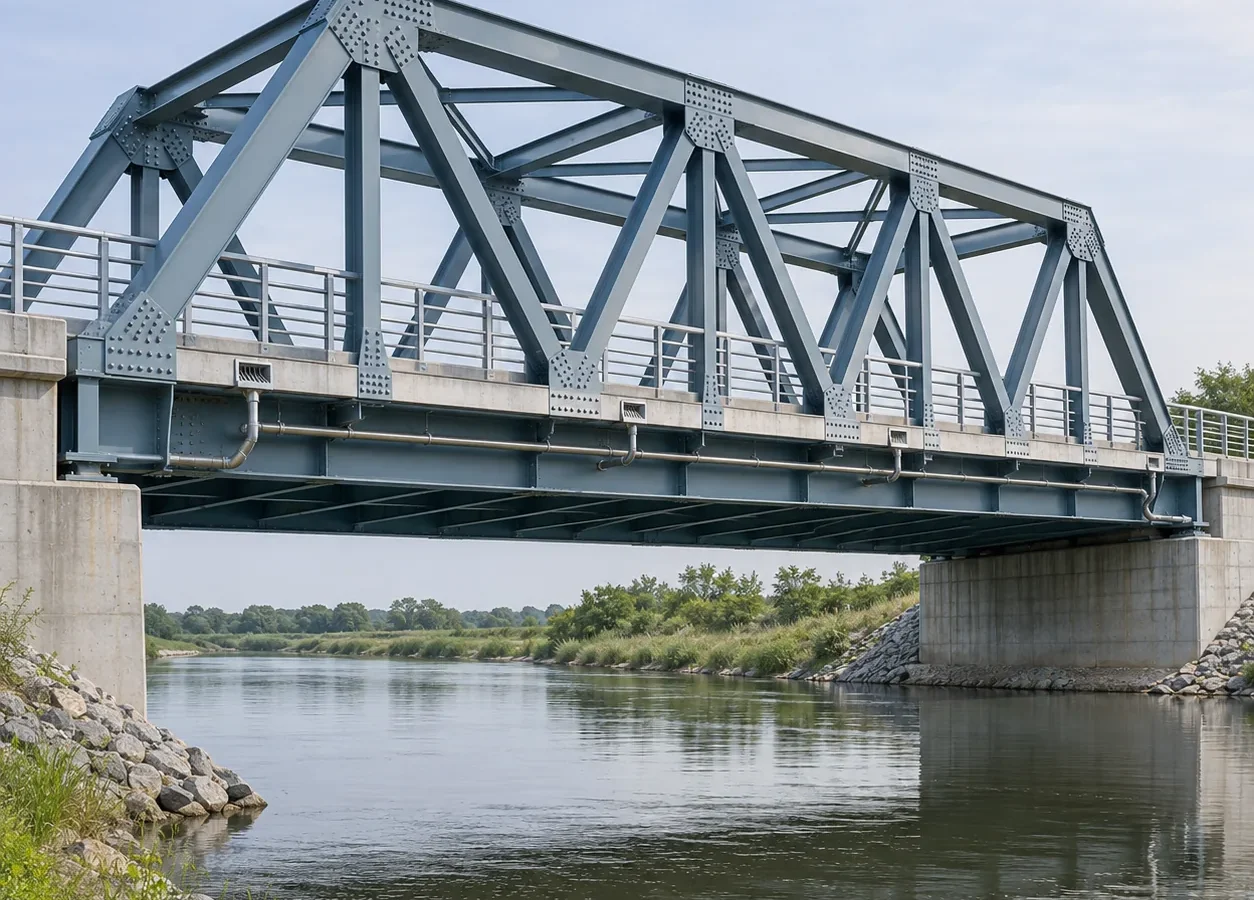
With sound design, appropriate protection and regular inspection, many steel bridges serve for 75 to 100 years. That range is a planning expectation, not a promise. Actual life depends on exposure, traffic, detailing, coating maintenance and how quickly problems are found.
Design life is not service life
Design life is the period used for engineering assumptions: fatigue cycles, coating life and maintenance intervals. Service life is what the bridge actually delivers. A bridge designed for 100 years can fall short if drainage is poor, if de-icing salt accumulates in a detail, or if inspections are postponed.
Water and salt decide more than traffic
Corrosion usually starts where water stays. Poor drainage, blocked gullies, debris against a bearing shelf, leaking joints and details that trap salt all shorten coating life. A bridge in a coastal or de-icing environment needs a coating system and a maintenance plan that match that exposure.
Traffic matters through fatigue, especially at connections, welds and details with stress concentrations. Good detailing reduces those concentrations; poor detailing creates cracks that inspections may not find until they are expensive to repair.
Protective systems need upkeep
A coating system is not permanent. Surface preparation, primer, intermediate and topcoat layers each have a service life. Touch-up and partial repainting are normal maintenance activities. Budgeting for them from the beginning is cheaper than discovering a failed coating over a large area.
What to inspect, and when
Routine inspections should look at drainage, bearings, expansion joints, deck joints, coating breakdown, corrosion at splash zones and any signs of movement. Special inspections may be needed after unusual loading, impact or a long interval without maintenance.
The output should be a condition record, not just a pass or fail. That record becomes the basis for the next maintenance budget and for deciding whether a repair is routine or structural.
Extending life on a new bridge
Several decisions made at design stage have a disproportionate effect: detailing for drainage and inspection access, specifying a coating system for the actual exposure, choosing connection details that are easy to inspect, and producing as-built records that later inspectors can trust.
SDKM fabricates bridge components with weld maps, NDT records and coating reports so the owner starts with a documented baseline instead of a blank file.