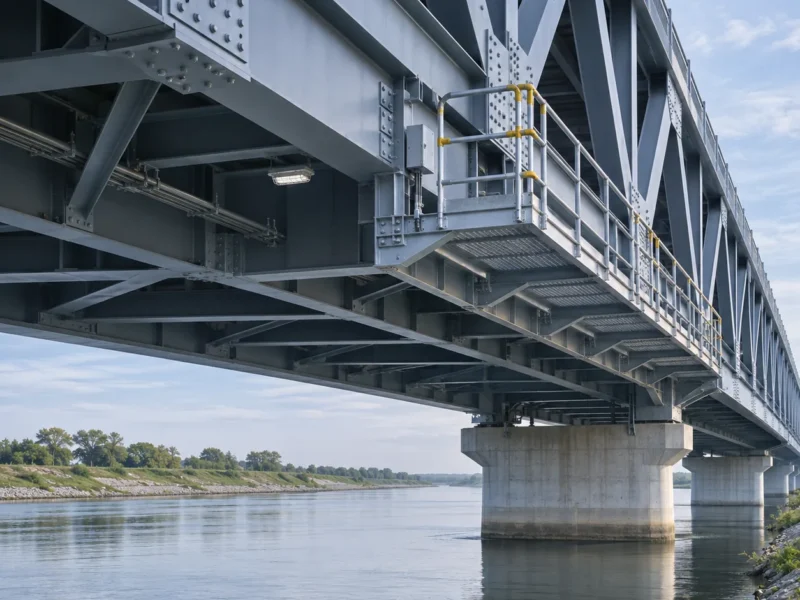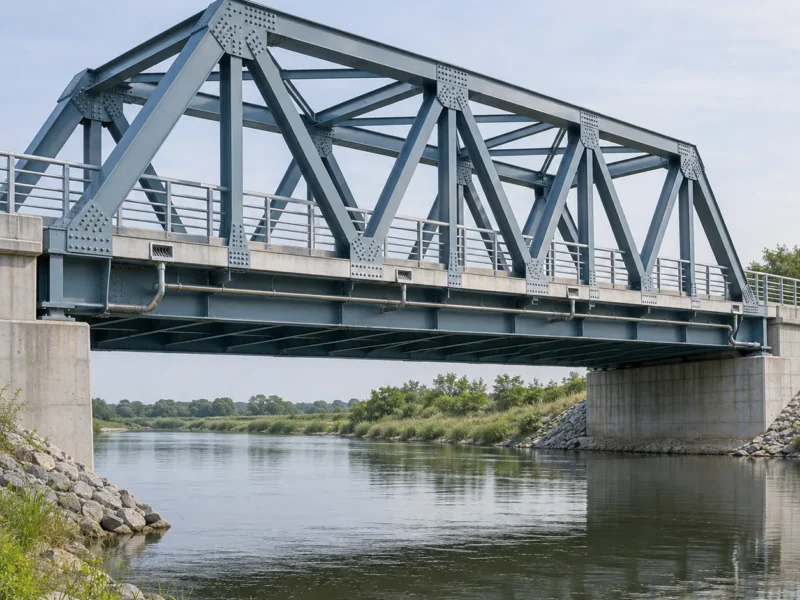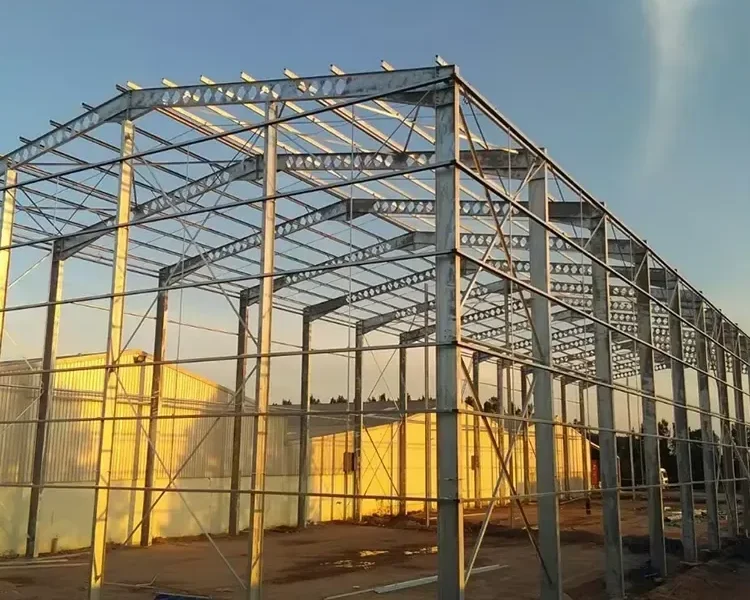
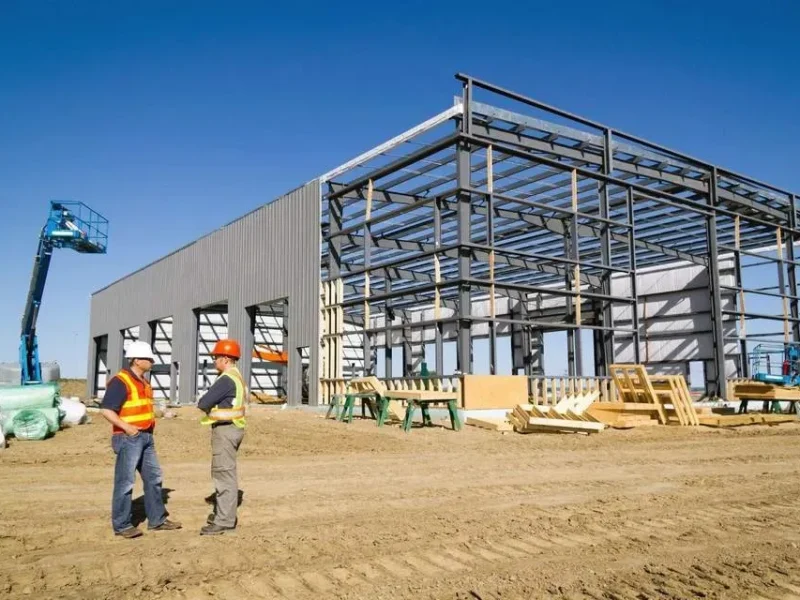

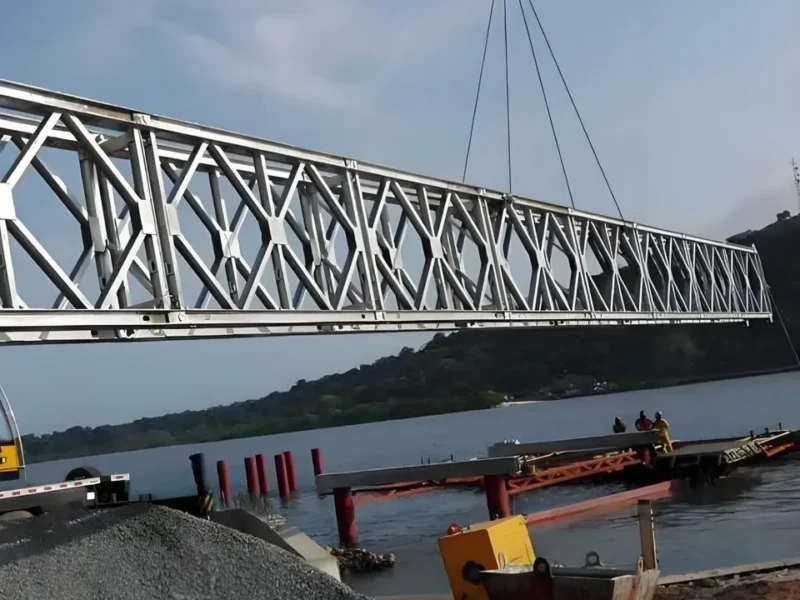
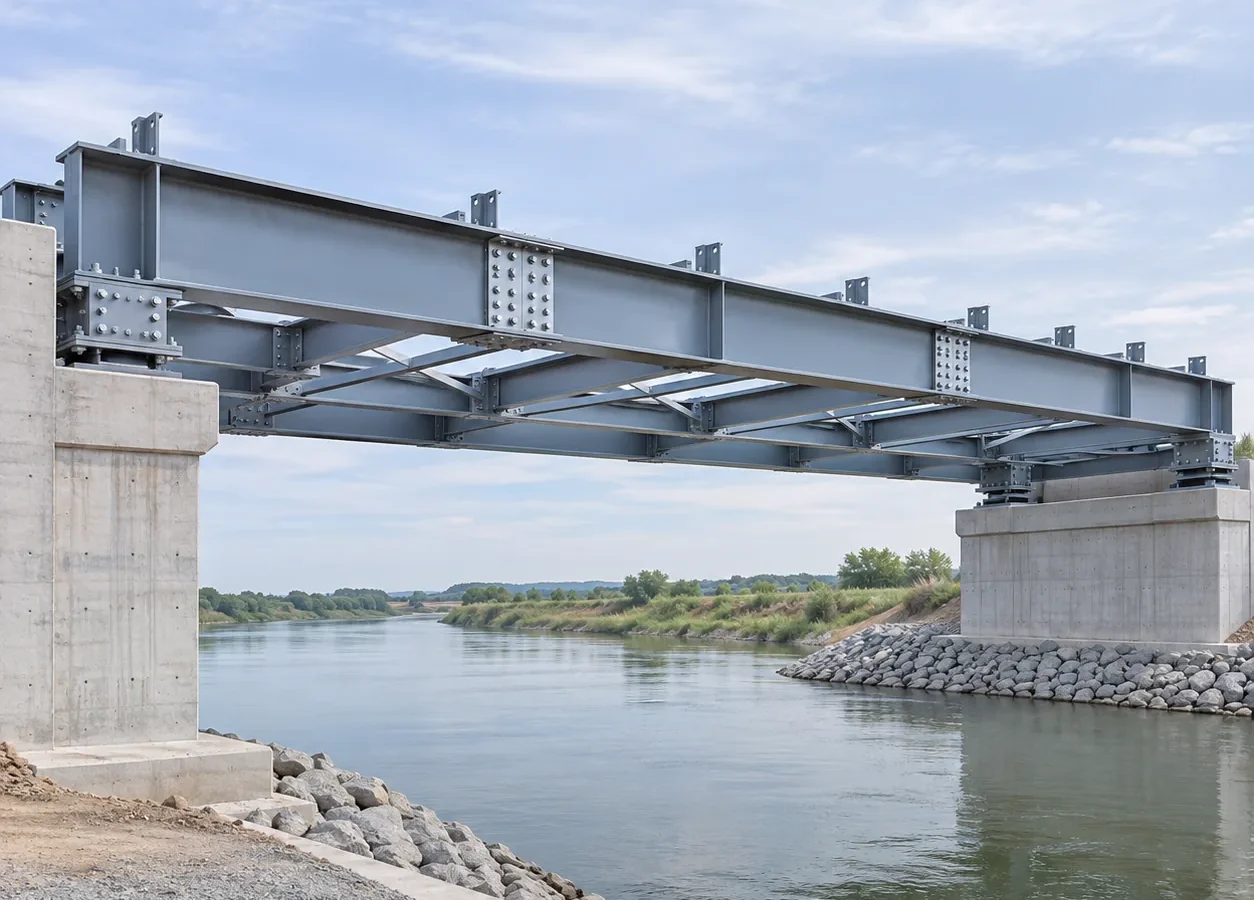
Steel bridges can be prefabricated, but the delivered package is rarely a complete bridge. Factory work typically covers girders, truss panels, bracing, deck units and connection components. Foundations, abutments, lifting and final assembly still happen at the crossing.
What arrives at site
The exact split depends on the span, the structural form, the route and the equipment available. A short pedestrian bridge may arrive as a few welded sections. A highway bridge may arrive as plate girders segmented for road transport, with cross-bracing and deck components packed separately. A modular truss bridge may arrive as standard panels that are assembled on site.
Every package should identify what is welded in the factory, what is bolted on site, and which connections require trial assembly before shipment.
Why prefabricate
Work over water, road closures, limited site space and bad weather all make site fabrication expensive and risky. Moving cutting, drilling and welding to a factory improves dimensional control, weld quality and coating consistency. It also shortens the time the crossing is occupied.
The trade-off is transport. Long members may need special permits, flat racks or breakbulk shipping. Segmentation must be chosen early, because it affects splice locations, connection design and lifting points.
Design for the route, not only the load
A bridge is designed for the load it carries and for the route it takes to the site. Transport height, width, length and weight are design inputs. So are the crane capacity at the bank, the access road and the space available for temporary supports.
If those limits are discovered after fabrication, the project may need field splices, extra lifting equipment or a different erection sequence. All are more expensive than resolving segmentation at the drawing stage.
Fabrication, inspection and shipment
Bridge work usually carries a higher inspection standard than a building. Weld procedures, welder qualifications, NDT extent, coating thickness and mill certificates should be agreed in the specification. Trial assembly is used where geometry or connection fit is critical.
Packing must protect coated surfaces, identify members by pier and span, and follow the erection order. Small connection parts should be boxed by assembly, not mixed in a single crate.
When prefabrication is not the right answer
Very small bridges, sites with excellent access and simple structures may be built conventionally. But for many crossings, prefabrication is less about a factory preference and more about reducing risk at the site.
SDKM plans bridge packages around the transport route and the erection method, then details the splices, lifting points and connection sequence before production.